Proposed Changes to Temporary Protection for Ukrainians
The European Commission has put forth a proposal that could alter the temporary protection status for Ukrainian men of military age residing within the European Union. This initiative, which has garnered support from a number of EU member states and the Ukrainian government itself, suggests that newly arriving individuals who are not permitted to leave Ukraine due to military obligations might not be granted the same protection.
Magnus Brunner, the European Commissioner for Internal Affairs and Migration, articulated this position while outlining potential modifications to the existing European protective status for Ukrainians. He clarified that while the overarching protection status for Ukrainians would remain in effect, new conditions could be applied to certain groups. This discussion took place during a meeting of EU interior ministers in Luxembourg earlier in June.
Current Temporary Protection Framework
Since March 2022, Ukrainians fleeing the conflict in their homeland have benefited from a temporary protection status within the EU. This status, distinct from traditional asylum, offers a streamlined process without individual case-by-case reviews and is set to expire in early March 2027. The current debate centers on its extension and potential adjustments.
While the Commission's proposal is framed in gender-neutral language, EU officials acknowledge that its primary impact would likely be on men aged between 23 and 60. It is crucial to note that these proposed updates would only apply to new arrivals and would not affect Ukrainians already under temporary protection in the EU. For the changes to take effect, they must be officially approved by the Council of Europe and subsequently published in the Official Journal of the European Union.
According to Eurostat, the EU's statistics agency, approximately 4.33 million Ukrainians were living under temporary protection in the bloc as of March 31. Germany hosted the largest share, with nearly 1.3 million individuals (29.4%), followed by Poland with 950,000 (22.2%), and the Czech Republic with 380,000 (8.8%). Adult males constituted slightly over a quarter of this total population.
Concerns and Justifications for the Proposal
“Our proposal provides that temporary protection should not be granted to newly arriving persons who are not allowed to leave Ukraine because of their military obligations,” stated Magnus Brunner.
The proposal has not been without criticism. Michael O'Flaherty, the human rights commissioner at the Council of Europe (an entity distinct from the EU), voiced concerns regarding what he described as “mounting pressure to prematurely end temporary protection arrangements” and to restrict access for military-age males. O'Flaherty emphasized the need for “more solidarity, not less” during this period.
Conversely, the EU has justified its proposal by citing requests from Ukraine itself. Kyiv's need to enforce military obligations among its citizens for national defense is seen as a legitimate concern. Brunner confirmed that the proposal had been developed in coordination with EU member states.
Member State Positions and the Road Ahead
During the EU interior ministers' meeting, several countries expressed their views on the matter. German Interior Minister Alexander Dobrindt supported the idea of revoking protection status for military-age Ukrainian males, while also suggesting that these individuals should still be able to apply for asylum. Austrian Interior Minister Gerhard Karner echoed this sentiment, expressing strong support for ending automatic protection for this demographic.
In contrast, Estonian Interior Minister Igor Taro expressed skepticism, advocating for the extension of the current temporary protection system without exceptions and suggesting direct discussions with Kyiv as the preferred approach.
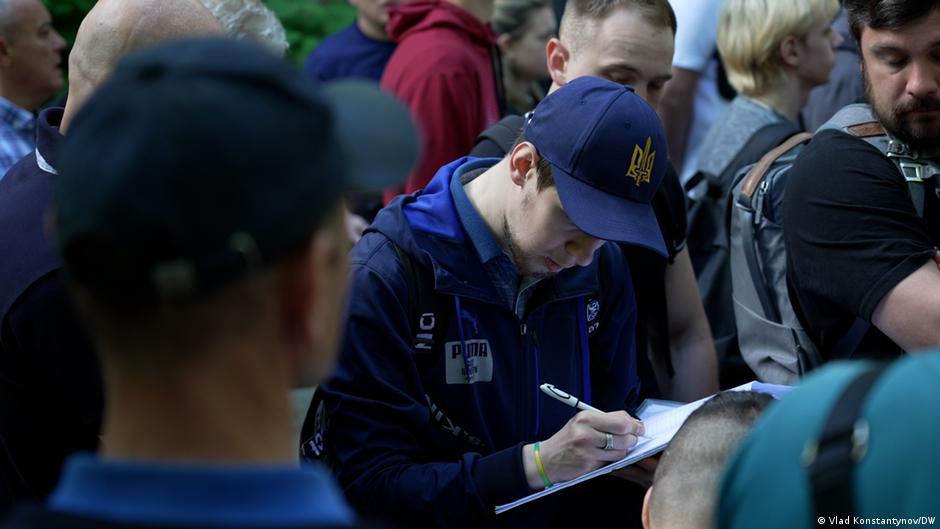
The current debate is influenced by the impending extension of the temporary protection status and a recent observed increase in the arrival of military-age Ukrainian men. While Ukrainian men generally face prohibitions on leaving the country between the ages of 23 and 60, conscription technically begins at 18, with active service commencing at 25. A policy change last summer, allowing men aged 18 to 23 to exit Ukraine, led to a noticeable rise in departures.
This discussion is not new. German Chancellor Friedrich Merz has previously called on Kyiv to prevent young men from leaving to serve in the military. Ukrainian President Volodymyr Zelenskyy, during a visit to Berlin in April, underscored that the return of military-age men would benefit Ukraine's armed forces, framing it as an issue of fairness.
With the European Commission having presented its proposal, it now requires approval by a majority of EU member states. Historically, such decisions have been made relatively swiftly by EU ministers.
Source: Original Article