New Hungarian Government Initiates Widespread Reforms
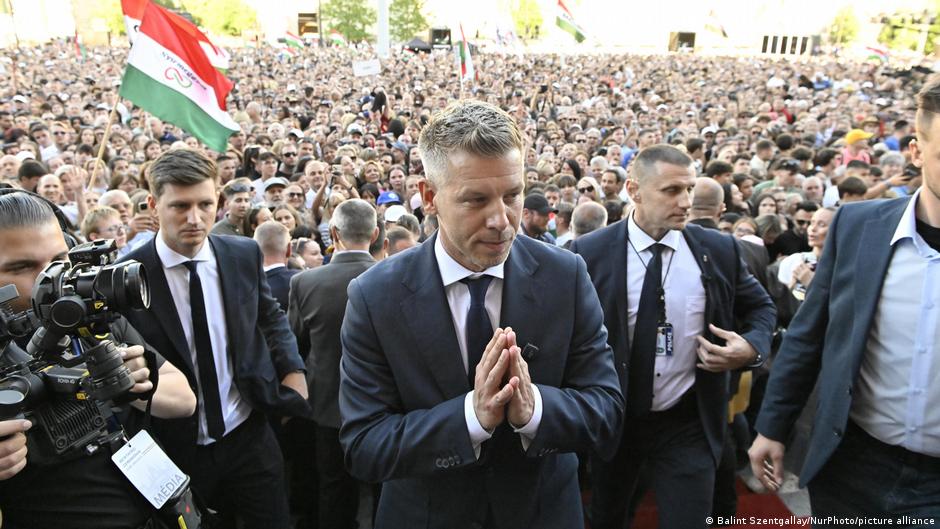
In a significant shift in Hungary's political landscape, the administration of Prime Minister Peter Magyar has embarked on an ambitious program to dismantle the system associated with former Prime Minister Viktor Orban. Since taking office, Magyar has moved swiftly, lifting EU blockades previously imposed by Orban and engaging in dialogue with Ukraine, a nation Orban had previously characterized as an "Empire of Evil." Domestically, the Hungarian parliament has already approved measures to reduce the salaries of lawmakers and ministers and has limited the prime minister's tenure to a maximum of two terms. While some of these initial steps carried symbolic weight, Magyar's government is now focusing on what it describes as the underlying architecture of the previous regime.
Reports indicate that Orban had established long-term strategies designed to impede future governments, including the potential for civil servants to obstruct new administrations and the alleged diversion of substantial funds to maintain his political network. However, with a two-thirds parliamentary majority, Magyar's Tisza party is well-positioned to systematically dismantle these entrenched structures.
"Operation Purgatory" Targets Alleged "Mafia System"
In a recent parliamentary address, Prime Minister Magyar characterized Orban's governance as a "mafia system" and vowed to eradicate it through an initiative he termed "Operation Purgatory." This designation, observers note, likely reflects Magyar's inclination towards religious and historical symbolism. The new prime minister has pledged to conduct thorough investigations into how Orban's family, associates, oligarchs, and high-ranking party members allegedly benefited illicitly, promising to recover any illegally obtained assets. Furthermore, he has committed to reforming state institutions, the judiciary, and the media to prevent a return to a system where political influence permeated these vital sectors. According to the online news outlet 444.hu, "Orban wanted to tie the hands of the next 10 governments. The Magyar administration is now ripping up that plan."
First Legislative Package Focuses on Anti-Corruption
This week, parliament passed the initial set of laws under "Operation Purgatory," predominantly comprising anti-corruption measures. These reforms are crucial for unfreezing approximately €17 billion ($19.3 billion) in EU funds for Hungary, which had been withheld by Brussels due to concerns about corruption during Orban's leadership. The timely passage of these laws is particularly significant given an August deadline for a substantial portion of these funds, specifically €10.4 billion.
A key component of this legislative package is the abolition of public interest asset management foundations (KEKVA). These private foundations, established during Orban's tenure, managed universities, cultural institutions, and historical monuments. They are widely perceived as emblematic of a kleptocratic system, having allegedly facilitated the transfer of public assets valued between €5 billion and €9 billion into private hands. Additionally, some KEVKAs were used to restructure the administration of most Hungarian universities, reportedly filling key positions with Orban loyalists and thereby undermining academic autonomy.
A prominent example is the Mathias Corvinus Collegium (MCC), an elite training and propaganda institution associated with Orban's Fidesz party. In 2020, at the government's direction, the MCC received 10% of the state's shares in both the oil company MOL and the pharmaceutical company Gedeon Richter, a gift estimated at €1.3 billion.
Enhanced Transparency and Media Reform
Beyond the KEVKAs, the new parliament has also strengthened the powers of the "Integrity Authority" and implemented stricter regulations for asset declarations by politicians and senior civil servants. Furthermore, rules governing transparency and accountability in public tenders have been tightened. Public tenders were reportedly a significant avenue for corruption and self-enrichment during the previous administration. For instance, companies owned by Lorinc Meszaros, a childhood friend of Orban who transitioned from a plumber to Hungary's wealthiest individual, frequently benefited from such tenders, earning him the moniker "Orban's wallet."
Another electoral promise fulfilled this week was the reorganization of public service media. New legislation includes a broad restriction on political hate campaigns, particularly those using nationwide poster campaigns and advertisements, which were prevalent during Orban's 16-year rule. During this period, public service media outlets were criticized for functioning as propaganda channels, often neglecting their legal obligation for objective reporting and rarely featuring voices outside of Fidesz. The old holding companies for public service media are now being dissolved and replaced by new bodies that will include representatives from journalistic organizations alongside political appointees.
Pursuit of Justice and Future Challenges
Initial steps towards other significant legislation and constitutional reform have also been undertaken. Many independent Hungarian observers consider the planned establishment of the National Asset Recovery and Protection Office (NVVH) to be among the most crucial initiatives. This office is central to Magyar's pledge to recover billions allegedly siphoned off by individuals close to Orban through opaque and potentially unlawful means, and to bring those responsible to justice. Political scientist Gabor Torok, speaking on 24.hu, described the NVVH as the "most important political measure" of the Magyar government, emphasizing its potential to address society's desire for accountability, a goal no Hungarian government has achieved since the fall of communism.
Magyar also intends to remove President Tamas Sulyok, whom he has labeled an "Orban regime puppet," and proposes limiting lawmakers to a maximum of three parliamentary terms. This latter proposal has drawn some criticism. Foreign policy expert Zsuzsanna Szelenyi, writing for Social Europe, highlighted the "post-illiberal trilemma" facing Magyar's government: "swiftly reversing the damage of illiberal rule, preventing a populist resurgence, and strictly observing constitutional norms." She stressed that "balancing speed, efficiency, and legality is essential to Hungary's re-democratisation."
Source: Original Article