Frida Kahlo: An Enduring Artistic Presence
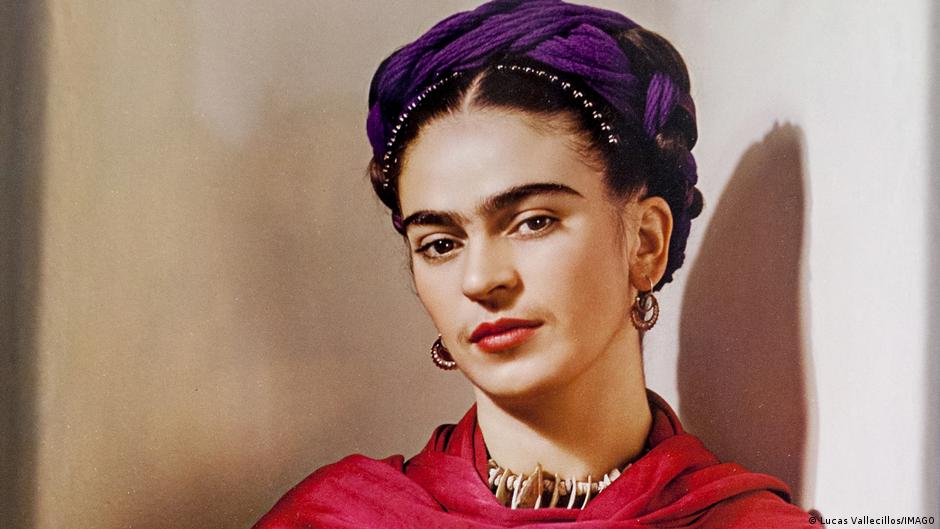
More than seventy years following her death in 1954, Frida Kahlo remains an indelible figure in the global art scene. The Mexican painter, recognized by her distinctive unibrow and iconic floral headpieces, has transcended her artistic origins to become a widely identifiable cultural icon. Her creations have commanded significant sums at auction, and her life and work are currently being honored at London's Tate Modern in an exhibition titled "Frida: The Making of an Icon." This showcase, which commenced on June 25th, is scheduled to run until January 3, 2027.
Born in 1907 in Coyoacán, now an integral part of Mexico City, Kahlo's lineage included a German immigrant father and a mother of mixed Spanish and Purepecha heritage. Her early years were marked by considerable physical adversity. She contracted polio as a child, and at the age of eighteen, she survived a severe bus accident that left her with permanent injuries, effectively ending her aspirations of a career in medicine. It was during her protracted recovery, confined to her bed, that she embarked on her artistic journey, utilizing a specialized easel and a mirror positioned above her.
The Unflinching Honesty of Self-Portraiture
Kahlo's oeuvre is predominantly characterized by her striking self-portraits. Unlike many artists who sought to idealize their subjects, Kahlo approached her self-depictions with brutal honesty, using them as a medium to confront and explore her physical disabilities, miscarriages, and emotional heartbreaks. These themes were largely unaddressed in art during her era, particularly from a female perspective. Her work defies easy categorization; though often associated with surrealism, Kahlo herself famously refuted the label, stating, "I never painted dreams. I painted my own reality."
Her personal reality was undeniably complex and rich. Kahlo's tempestuous marriage to the celebrated Mexican artist Diego Rivera, who was two decades her senior and arguably the most renowned artist in Mexico during their time, is well-documented. Throughout her life, Kahlo frequently found herself overshadowed by Rivera's fame. However, it is her artistic legacy that has truly endured, manifesting in a phenomenon often termed "Fridamania." Her image and artwork are ubiquitous, appearing across various platforms, from social media feeds to commercial merchandise and major museum retrospectives.
In 2021, her painting "Diego y yo" (Diego and I) achieved a remarkable $35 million at auction. This particular work strikingly features Rivera's image depicted as a third eye on Kahlo's forehead, symbolizing their profound, albeit often painful, bond. Despite the emotional turmoil that characterized their relationship, Kahlo and Rivera shared a deep intellectual and emotional connection, remaining together until her death in 1954.
Another significant milestone occurred in 2025 with the auction of Kahlo's work "El Sueño" (The Dream), which set a new record for art by a female artist, selling for an astonishing $54.7 million. This painting portrays a sleeping Kahlo, enveloped in vines, a likely allusion to her chronic pain, with a skeleton holding dynamite ominously positioned above her bed canopy.
Challenging Gender Norms and Cultural Identity
Kahlo was a trailblazer in defying conventional gender roles, a characteristic that continues to resonate strongly with the LGBTQ+ community today. She was openly bisexual, engaging in relationships with both prominent men and women during her marriage to Rivera. In some of her works, such as the 1940 "Self-Portrait with Cropped Hair," she deliberately presented herself with masculine attributes, donning a loose-fitting men's jacket and sporting short hair. Furthermore, she consistently challenged traditional beauty standards by prominently featuring her signature unibrow and visible mustache in her self-portraits, elements that underscored her strikingly frank artistic expression. Exhibitions dedicated to her art consistently attract large audiences worldwide.
The forthcoming Tate Modern exhibition promises to feature over thirty of Kahlo's most celebrated works, aiming to introduce what curators describe as her "'many selves' — the dedicated wife, the intellectual, the modern artist, and the political activist."
From Academic Interest to Global Icon
Kahlo's current iconic status was not always a given. The publication of Hayden Herrera's 1983 biography, "Frida: A Biography of Frida Kahlo," played a pivotal role in elevating her from an artist primarily known within academic circles to a globally recognized painter and public figure. This book subsequently served as the foundation for the 2002 film "Frida," starring Salma Hayek, further cementing her place in popular culture.
The widespread commercialization of Kahlo's image, which now adorns everything from coffee mugs to apparel, has drawn criticism. Detractors argue that this marketable persona often overshadows the artist's profound political convictions and the nuanced complexities of her work. Kahlo was a staunch communist, deeply engaged with the political upheavals of her era, maintaining associations with prominent left-wing figures, including the exiled Russian revolutionary Leon Trotsky.
Today, Kahlo remains Mexico's most celebrated artist. Her work is replete with traditional Tehuana dresses, Indigenous symbolism, and references to the Mexican landscape. While she championed Indigenous cultures as the daughter of a mestiza woman, her relationship with Indigenous identity was complex, as noted by her biographer Herrera. She often strategically employed Indigenous imagery to construct her artistic persona and articulate ideas about Mexican identity, femininity, and politics, despite her own upper-class intellectual background. Nevertheless, these complexities have not diminished her broader legacy. There is no indication that "Fridamania" will abate anytime soon. Kahlo's powerful personality, her lived experiences, and her unflinching ability to convey raw emotion through her art have ensured her enduring relevance.
Source: More than a unibrow: The enduring appeal of Frida Kahlo