Avian Flu's Lingering Impact on Gannet Populations
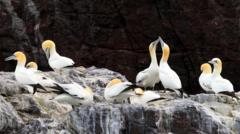
Gannet colonies at two of the world's most significant sites are projected to take nearly two decades to rebound from the effects of the 2022 avian influenza outbreak. A new report by the RSPB highlights that seabirds at Bass Rock, located off Scotland's east coast, and Grassholm, situated near the Pembrokeshire coast in Wales, suffered an "unprecedented deadly blow" during the epidemic.
The outbreak led to a fourfold increase in adult gannet fatalities, resulting in a 26% reduction in the Bass Rock colony's size and a 38% decrease at Grassholm. While the outbreak was already known to have claimed tens of thousands of birds, the study warns that these colonies might not achieve full recovery until 2041 at the earliest.
The Spread and Consequences of H5N1
The H5N1 bird flu virus, initially identified in poultry in Asia in 1996, subsequently spread to wild bird populations globally. Its presence was first confirmed in gannets at Bass Rock on June 4, 2022, and at Grassholm the following month. Researchers emphasize that the surge in deaths among adult breeding birds will have a long-term impact on population growth within these colonies.
In light of the devastation, the researchers suggest that the global conservation status of Northern gannets, currently listed as "least concern" on the IUCN Red List of threatened species, should be re-evaluated.
Conservation Efforts and Future Outlook
Bass Rock, home to the world's largest Northern gannet colony and recently acquired by RSPB Scotland, has been a critical breeding ground. Recent surveys underscore the critical situation facing UK seabirds, with many breeding populations continuing to decline.
Jude Lane, the lead author of the study and a marine conservation scientist at the RSPB, commented, "The bird flu outbreak in 2022 dealt an unprecedented deadly blow to UK seabirds and these findings show that key gannet colonies on Bass Rock and Grassholm will be impacted for decades to come." Lane added that while preventing diseases like bird flu is not feasible, long-term monitoring can enhance understanding of their impacts. This knowledge, she noted, can better position conservation efforts to address other pressures on seabirds and help reverse recent declines.
Source: BBC News