Hamas's Announced Civilian Administration Shift Faces On-Ground Skepticism
Recent reports indicate that Hamas, the militant group controlling parts of Gaza, declared its intention to dismantle its civilian administration as part of a US-brokered peace agreement from 2025. This move was intended to facilitate a handover to Palestinian technocrats. However, residents within Gaza describe a stark contrast between these official pronouncements and their daily experiences, suggesting that existing institutions continue to operate largely unchanged.
Eyad Saleh, a 19-year-old from Gaza City, recounted his attempt to obtain a replacement university diploma, a document he lost during recent conflicts. He found himself directed to the same government offices that have always been managed by Hamas. "There's nowhere else to go in Gaza except the institutions run by Hamas," Saleh told a German media outlet. He further elaborated that the only entity providing essential services remains the same body that was in place before the conflict, staffed by the same personnel. Saleh, who aspires to pursue higher education abroad, views a scholarship as his pathway out of the challenging conditions in Gaza.
Similarly, Na'ama Saeed, 39, who manages a chronic illness, visited the Ministry of Health this week to secure a medical referral. She confirmed that the Ministry of Health remains the sole authorized body for issuing such official documents. Saeed expressed a sentiment shared by many: "If there were another official body we could turn to without dealing with the current government, we would not hesitate."
Transitional Governance Plans Face Implementation Hurdles
The US peace plan, introduced in October 2025, envisioned a new administrative structure for Gaza, composed of independent technocrats. This led to the establishment of the National Committee for the Administration of Gaza (NCAG) in early 2026, a transitional body comprising Palestinian experts and overseen by the Board of Peace, initiated by former US President Donald Trump. However, the 15 members of this committee are currently in Cairo, Egypt, awaiting authorization from Israel to enter Gaza and commence their duties.
Ghassan Khatib, an international politics lecturer at Bir Zeit University near Ramallah, highlighted the lack of tangible change. "There is no change, nobody is stepping in to take over," he stated. Khatib noted that neither the American nor Israeli authorities appear enthusiastic about Hamas's proposed administrative shift. Furthermore, he pointed out that the Palestinian Authority is unable to capitalize on this situation due to restrictions imposed by both Israel and the United States.
Adding to the complexity, Hamas, designated a terrorist organization by several nations, has indicated its ministries and their appointed staff will remain operational. The group also intends to maintain control over security and policing in the approximately 30% of Gaza that remains under its influence. The remaining 70% of the territory is currently occupied by Israeli troops, forming what Israeli Prime Minister Benjamin Netanyahu refers to as a buffer zone aimed at preventing future attacks by Palestinian militants.
Stalled Ceasefire and Persistent Humanitarian Crisis
The ceasefire process itself has encountered significant delays, with both Israel and Hamas attributing blame for alleged violations. Reports from the Hamas-run Health Ministry in Gaza indicate that over 1,000 Palestinians have died in Israeli attacks since the October 2025 ceasefire. A critical sticking point in negotiations remains the decommissioning of Hamas's weaponry. Hamas has consistently refused to disarm until Israeli attacks cease and its forces withdraw from Gaza.
Ibrahim al-Madhoun, a Gazan political analyst with ties to Hamas, suggested that the offer to transfer civilian administration is "an attempt by Hamas to break the deadlock." He referenced unsuccessful negotiations in Cairo with Nikolay Mladenov, the High Representative of the Board of Peace, who is mediating the discussions.
Public Sentiment and Humanitarian Woes
Public opinion in Gaza is increasingly characterized by disillusionment. Surveys, though acknowledged to be challenging to conduct accurately given the circumstances, suggest a growing number of residents distrust both Hamas and Fatah, the dominant party in the Palestinian Authority. Ghassan Khatib, who also founded the Jerusalem Media and Communication Center (JMCC), noted that approximately 60% of survey respondents express distrust in all political factions, a figure that has been on the rise.
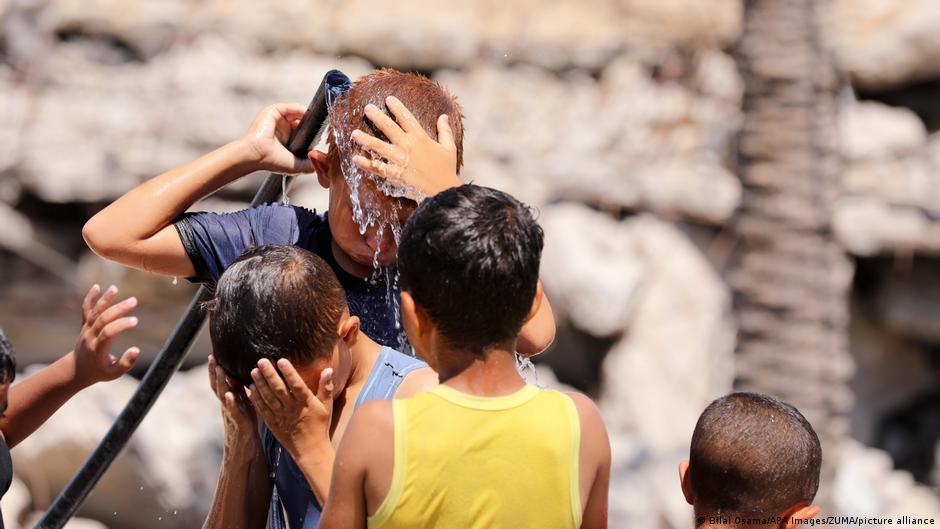
The humanitarian situation in Gaza remains dire. Aid organizations continue to criticize Israel for impeding the flow of humanitarian assistance, a claim Israel's civil administration, COGAT, disputes. Recently, Ramiz Alakbarov, UN Deputy Special Coordinator for the Middle East Peace Process, condemned the obstruction of humanitarian operations by Gaza's "de facto authorities," referencing an incident where armed individuals allegedly linked to Hamas disrupted a food distribution point in Jabalia. Hamas has denied these allegations.
Eyad Saleh, the student hoping to study abroad, chose to be identified only by his middle and second names due to concerns about potential repercussions. He represents a generation of young Palestinians who have grown up under Hamas rule and Israeli-imposed isolation. For Saleh, the political landscape necessitates careful communication, but he believes Gaza desperately needs a new beginning. "I don't care about political factions," he asserted. "But I believe Gaza deserves better than Hamas and better than any other political faction in Palestine, because they have all failed."
Source: Original Article