Germany's Mounting Debt and Shifting Priorities
Germany is grappling with a rapidly expanding national debt, a situation highlighted by the country's draft budget for 2027. This fiscal plan projects a substantial increase in borrowing, largely propelled by a significant boost in military expenditure. The proposed budget, which has received cabinet approval and now awaits parliamentary deliberation, underscores a notable reorientation of national financial priorities.
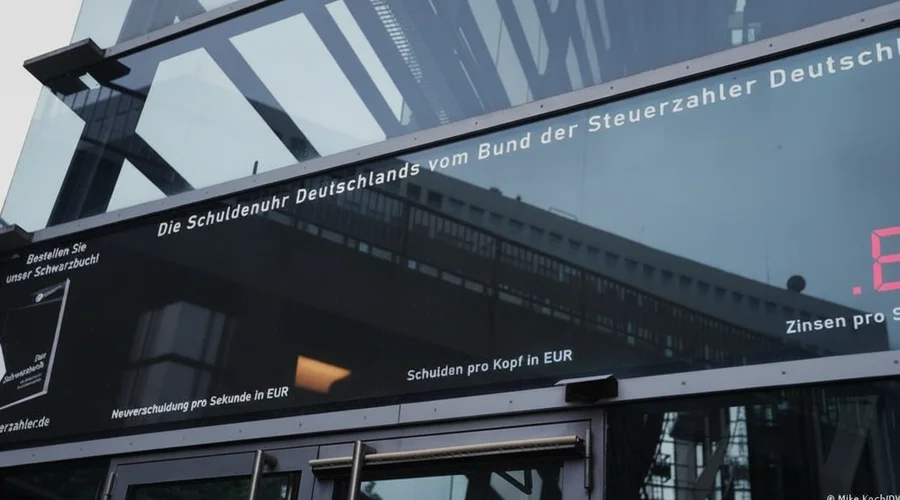
A visual representation of Germany's financial state, the 'debt clock' in Berlin, maintained by the German Taxpayers' Federation, consistently displays the escalating national debt. As of early July, this figure stood at an imposing €2.78 trillion ($3.18 trillion). The 2027 draft budget is anticipated to further inflate this sum.
Budgetary Allocations and Debt Projections
Federal Finance Minister Lars Klingbeil, representing the center-left Social Democratic Party (SPD), estimates total spending for 2027 at €555.4 billion. A considerable portion of this, €109.7 billion, is allocated to defense, marking a one-third increase from 2026 levels. With expenditures projected to significantly outstrip tax revenues, Klingbeil's plan necessitates nearly €119 billion in new borrowing from the regular budget.
Beyond the direct budget, Germany also utilizes debt-financed special funds, which function as supplementary financial instruments. One such fund, valued at €500 billion, is designated for infrastructure maintenance and climate neutrality initiatives over a twelve-year period. These funds are intended to address issues such as deteriorating roads, bridges, and the rail network. An additional special fund has been established for the Bundeswehr, Germany's armed forces. This initiative aims to progressively raise defense spending to 3.5% of GDP by 2029, with a further increase to NATO's new target of 5% by 2035.
Finance Minister Klingbeil justified this surge in military spending by citing geopolitical concerns. "Putin's imperialist delusions pose a greater threat to peace in Europe than we have seen in a long time," he stated, emphasizing the necessity of rapid rearmament after decades of defense budget reductions. He acknowledged that achieving this without incurring new debt is unfeasible.
The 'Debt Brake' and Economic Realities
When factoring in borrowing from both the regular budget and special funds, Germany's new debt for 2027 is projected to reach approximately €203 billion. This upward trajectory is expected to continue, with the German Chamber of Commerce and Industry calculating an average annual spending increase of five percent through 2030, while tax revenues are only anticipated to grow by about three percent annually. Consequently, interest payments on this accumulating debt are projected to reach €80 billion by 2030, potentially consuming nearly one-fifth of all tax revenue.
Germany's Basic Law, its constitution, includes a 'debt brake' mechanism, limiting new borrowing to 0.35% of GDP. However, certain exemptions exist, particularly for defense and security spending, and during economic downturns. Klingbeil asserts that Germany, as Europe's largest economy, can manage this debt, noting that its debt level remains below the Eurogroup average. While the eurozone limits debt to 60% of GDP, Germany's debt is forecast to be 69.5% in 2027.
The current economic climate in Germany presents additional challenges. Despite an earlier commitment by the ruling coalition (comprising the CDU/CSU and SPD) to revitalize the economy, the nation continues to face a deep economic crisis. Klingbeil attributed some of these difficulties to external factors, specifically mentioning the economic impact of international conflicts. To generate new revenue, the government plans to introduce taxes on plastic, sugar, tobacco, and alcohol, alongside a proposed 'tax on the super-rich.' However, these measures are considered insufficient to address the scale of the financial shortfall.
Cuts, Social Programs, and Environmental Concerns
The government's fiscal strategy also involves significant budget cuts across various ministries, with the Defense Ministry being the sole exception. These cuts are projected at one percent in 2027 and three percent in 2028. This will impact financial aid to social security funds, including pension and health insurance, which traditionally rely on substantial federal subsidies. The German Trade Union Confederation has criticized this approach, viewing it as an "enormous imbalance" where social welfare is being curtailed while military spending expands.
Environmental groups and the Green Party have voiced strong opposition to proposals to draw from the Climate and Transformation Fund (KTF), which is financed by EU Emissions Trading System revenues, to plug budgetary gaps. Green Party leader Felix Banaszak cautioned against misusing these funds.
Development aid has also seen significant reductions in recent years. Its budget is slated for another €500 million cut in 2027, bringing the total to €9.5 billion. While acknowledging these "tough decisions," Finance Minister Klingbeil maintained that Germany remains a credible international partner, highlighting its position as the largest donor in international development financing following the withdrawal of the US. Children's aid organizations, such as Save the Children, have urged parliament to increase funding for humanitarian aid during the budget's parliamentary review.
Parliamentary deliberations on the draft budget are scheduled to commence in September, with a final adoption anticipated by the end of November.
Source: Original Article