NATO Summit Underway in Ankara
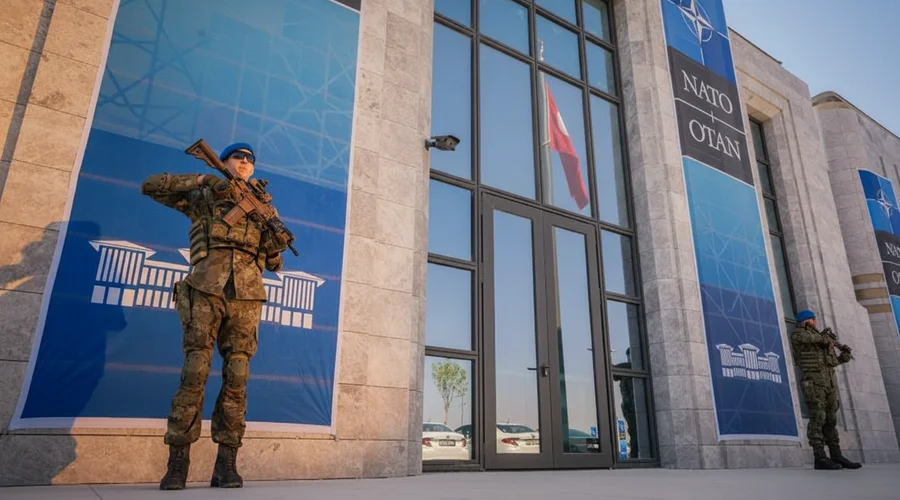
The Turkish capital, Ankara, is currently hosting a pivotal summit for the North Atlantic Treaty Organization (NATO), bringing together heads of state and government from all 32 member nations. This two-day gathering is designed to address a spectrum of pressing geopolitical concerns and to reaffirm the alliance's enduring commitment to collective defense and security. The Secretary General of NATO, Mark Rutte, articulated the summit's overarching objective, emphasizing the necessity for the military alliance to consistently fulfill its mandate and adapt to contemporary challenges.
Addressing Evolving Security Landscapes
The international security environment has undergone significant transformations in recent years, marked by persistent conflicts, technological advancements in warfare, and a resurgence of great power competition. Against this backdrop, the Ankara summit provides a crucial platform for allied leaders to synchronize their strategic approaches. Discussions are anticipated to delve into various facets of defense and deterrence, including the enhancement of military readiness, the modernization of armed forces, and the strengthening of interoperability among member states. The agenda likely includes an assessment of existing defense postures and the identification of areas requiring further investment and coordination to ensure NATO's continued effectiveness.
One of the central themes of the summit is expected to be the ongoing conflict in Eastern Europe, which has profoundly reshaped security perceptions across the continent. Member states are likely to review their support mechanisms for affected nations and discuss long-term strategies for regional stability. This involves not only military assistance but also economic and humanitarian aid, underscoring a comprehensive approach to crisis management. Furthermore, the summit will likely address the implications of this conflict for NATO's eastern flank, with particular attention to reinforcing deterrence and defense capabilities in that region.
Enhancing Defense Cooperation and Burden-Sharing
A perennial topic at NATO summits, burden-sharing, is expected to feature prominently in the Ankara discussions. Member states are continually encouraged to meet or exceed the agreed-upon target of allocating at least 2% of their Gross Domestic Product (GDP) to defense spending. This commitment is viewed as essential for maintaining the alliance's collective strength and ensuring that all members contribute equitably to shared security responsibilities. The summit offers an opportunity for leaders to assess progress on this front and to reiterate their commitment to robust defense investments, particularly in light of current global uncertainties.
Beyond financial contributions, defense cooperation extends to joint training exercises, intelligence sharing, and collaborative research and development in military technologies. These initiatives are vital for fostering cohesion and ensuring that NATO forces can operate seamlessly together in any contingency. The Ankara summit will likely explore new avenues for enhancing these cooperative efforts, potentially including discussions on emerging technologies such as artificial intelligence, cyber warfare, and autonomous systems, and how these can be integrated into NATO's operational framework.
Strategic Alliances and Regional Stability
Turkey's role as a key NATO member, situated at a critical geopolitical crossroads, adds a unique dimension to the Ankara summit. Its strategic location, bordering multiple regions of geopolitical significance, positions it as an important actor in discussions concerning regional stability, energy security, and migration. The summit will likely provide an opportunity for allied leaders to engage with Turkey on these complex issues, fostering dialogue and seeking common ground on approaches that benefit the broader alliance.
Furthermore, discussions may extend to NATO's partnerships with non-member countries and other international organizations. These partnerships are crucial for extending stability beyond the alliance's immediate borders and for addressing transnational threats such as terrorism, piracy, and organized crime. The summit could explore ways to deepen these collaborations, enhancing information exchange and joint initiatives to counter shared security challenges. The overarching aim is to ensure that NATO remains a flexible and adaptive organization, capable of responding to a diverse array of threats in an interconnected world.
Looking Ahead: The Future of NATO
The Ankara summit is not merely about addressing immediate concerns; it also serves as a forward-looking forum for shaping the future trajectory of NATO. Leaders will likely deliberate on the alliance's long-term strategic concept, ensuring it remains relevant and effective in an ever-evolving global security landscape. This includes adapting to new forms of hybrid warfare, addressing climate change as a security multiplier, and responding to challenges in the space and cyber domains.
Ultimately, the decisions made in Ankara will have significant implications for international security and the stability of the Euro-Atlantic region. The summit is expected to conclude with a communiqué outlining the alliance's renewed commitments, strategic priorities, and actionable plans for the coming years. The emphasis will be on reinforcing unity, bolstering defense capabilities, and demonstrating NATO's unwavering resolve to protect its member states and uphold international peace and security.
Source: Original Article