Germany Endures Unprecedented Heatwave, Shattering Temperature Records
Germany has been in the grip of an extraordinary heatwave, which has seen the nation record its highest temperatures for three consecutive days. The German Weather Service (DWD) reported a new provisional record of 41.7 degrees Celsius (approximately 107 degrees Fahrenheit) in Coschen, Brandenburg. This follows previous records set on Saturday in Drewitz, Saxony-Anhalt (41.5 degrees Celsius), and Friday in Saarbrücken (41.3 degrees Celsius). The extreme heat, which has gradually shifted eastward, has prompted widespread concern and a range of challenges across the country.
Beyond daytime highs, the heatwave has also led to record-breaking overnight temperatures. The village of Kubschütz in Saxony recorded an overnight low of 29.4 degrees Celsius (84.9 degrees Fahrenheit), marking the highest overnight low ever registered in Germany. Such persistent high temperatures, even during nighttime hours, exacerbate the health risks associated with heat exposure and offer little respite for residents.
Widespread Impacts on Infrastructure and Public Safety
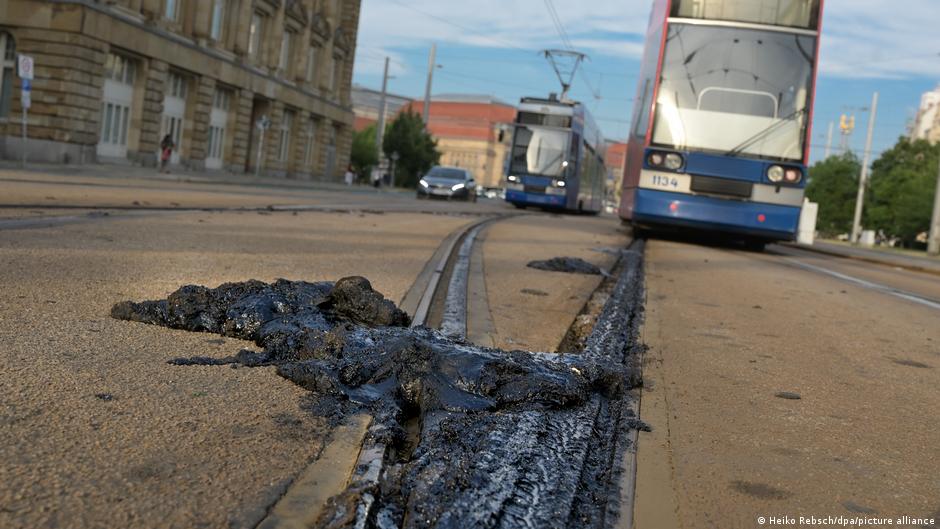
The intense heat has placed considerable strain on infrastructure, particularly in urban areas. In Leipzig, tram services were suspended throughout the weekend due to asphalt and bitumen melting on tracks and points, rendering them impassable. The Leipzig Transport Authority (LVB) deemed it unsafe for trams to operate, highlighting the direct impact of extreme weather on daily life and public transportation systems. While buses continued to run, the disruption underscored the vulnerability of urban infrastructure to severe heat.
Tragically, the heatwave has also been linked to a rise in swimming-related fatalities. At least seven individuals lost their lives in swimming accidents across Germany over the weekend, as many sought relief from the scorching temperatures in lakes and rivers. Incidents were reported in various locations, including Berlin, Baden-Württemberg, Hesse, North Rhine-Westphalia, and near Lake Constance. These incidents serve as a stark reminder of the dangers associated with open water swimming, particularly during periods of extreme heat when bodies of water attract large numbers of people.
Forest Fires and Munition Risks
The dry conditions and high temperatures have significantly increased the risk of forest fires across Germany. While many fires have remained relatively contained, some have posed specific challenges. In Rhineland-Palatinate, a fire near Bad Kreuznach broke out in an area containing spent and unexploded munitions from former military training grounds. This necessitated the evacuation of residents within a 1-kilometer radius as a precautionary measure, with authorities and arms disposal teams on-site to assess the danger. Explosions were reported within the fire zone, complicating firefighting efforts.
Further east, in the Gohrischheide heath near the Saxony-Brandenburg border, firefighters battled another significant blaze. Despite initial containment efforts, authorities warned that rising temperatures and anticipated winds could re-intensify the fire. Similarly, in Mecklenburg Western-Pomerania, a fire near a former Soviet-era tank training area, also laden with munitions, required specialized cooling operations. These incidents underscore the dual threat of heat-induced fires and the historical legacy of military activity in certain regions.
Other Notable Developments Amidst the Heat
Beyond the immediate impacts of the heatwave, other significant events unfolded across Germany. An experienced 57-year-old Austrian climber was found dead in the Berchtesgaden Alps, near the German-Austrian border, after a fall. Investigations are ongoing, but police noted the climber was alone and without safety equipment, with no initial indications of foul play. This incident highlights the inherent risks associated with mountaineering, even for experienced individuals.
In a more positive development, German author Lena Schätte was awarded the prestigious Ingeborg Bachmann Prize for her novel 'Was wir tragen' ('What we bear'). The jury lauded Schätte's powerful storytelling, which explores the friendship between two overweight girls and their experiences of societal exclusion. This literary recognition adds a cultural highlight amidst the challenging environmental conditions.
As the heatwave is expected to recede with storm fronts approaching from the south and west, bringing cooler temperatures, Germany is left to assess the extensive impacts of this record-breaking period. The events of the past few days have brought into sharp focus the growing challenges posed by extreme weather phenomena and the need for robust preparedness and response strategies across various sectors.
Source: Original Article