German Aid Organizations Urge Reversal of Funding Cuts
As Germany prepares for the launch of its North-South Commission, leading development organizations are vocally challenging the government's approach to international aid. Groups such as Terre des Hommes and Welthungerhilfe have called for an immediate reversal of billions in funding cuts, warning that current policies are undermining global humanitarian efforts amidst escalating crises worldwide.
In their annual publication, 'Kompass 2026,' presented in Berlin, these organizations offered a critical assessment of Germany's development aid. The report highlights that a combination of insufficient political backing, substantial reductions in financial resources, and a growing disregard for international humanitarian law are severely impeding the ability to assist vulnerable populations. This situation, they argue, compromises the efficacy and dependability of humanitarian aid initiatives.
Significant Budget Reductions Impact Aid Efforts
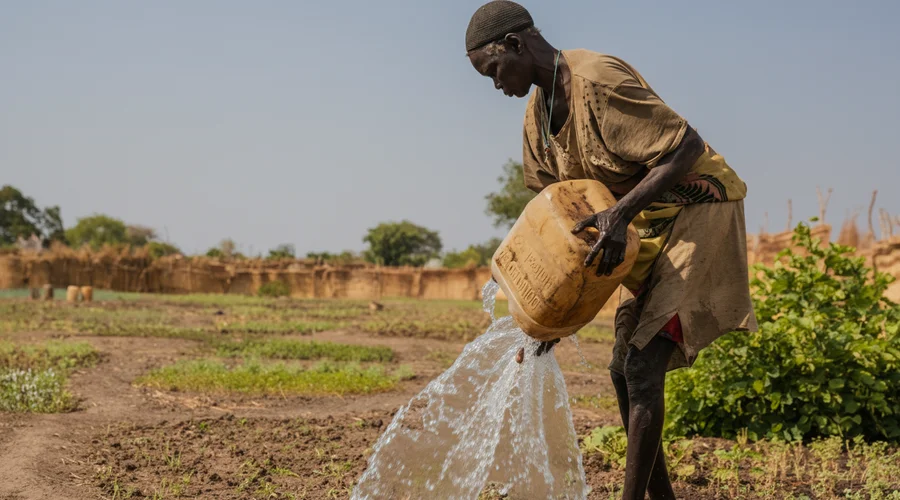
Since 2022, the budgets allocated to Germany's Ministry for Economic Cooperation and Development, as well as for humanitarian aid, have seen consistent annual reductions. Cumulatively, funding has been cut by approximately one-third. Currently, about €10 billion ($11 billion) is designated for development aid and €1 billion for humanitarian assistance, with further cuts anticipated. This trend is occurring at a time when millions globally are facing severe hunger due to worsening droughts and conflicts.
Mathias Mogge, head of Welthungerhilfe, emphasized that the issue isn't a complete failure of development policy but rather a profound absence of a coherent strategy. He expressed dissatisfaction with the reform plan introduced by Development Minister Reem Alabali Radovan in January, arguing that any credible political framework must be built on genuine partnerships among equals, moving beyond mere rhetoric. Joshua Hofert, a board spokesperson for Terre des Hommes, succinctly summarized their critique: "The reform of development policy must not become a mere administrative project led by Berlin."
Calls for Greater Inclusion and Strategic Vision
The 'Kompass 2026' report advocates for a more significant involvement of civil society actors from the Global South in the development process. It specifically stresses the importance of engaging young people in the formulation, execution, and evaluation of development policy strategies, asserting that their insights and expertise are vital for ensuring the legitimacy, effectiveness, and long-term viability of policy decisions.
The organizations also point out that Germany's reductions in development aid align with a broader global pattern. Many nations are increasing military expenditures in response to a rising number of conflicts and crises, often at the expense of global development and humanitarian aid budgets. However, aid groups warn that Germany risks damaging its international credibility and reliability through these significant cuts.
They recommend that the federal government better integrate development cooperation, peacekeeping, and humanitarian aid, securing these areas with multi-year funding commitments. The report also urges Germany to leverage diplomatic channels to protect humanitarian principles, prevent the political manipulation of aid, and more effectively advocate for adherence to international humanitarian law. This includes consistently addressing violations of international law within United Nations forums and demanding unimpeded humanitarian access to crisis zones.
The Role of the New North-South Commission
A potential source of optimism for aid organizations is the upcoming North-South Commission, scheduled to launch on June 30 in Hamburg. This commission will comprise approximately 20 experts from both the Global South and Global North, representing diverse fields such as politics, academia, the private sector, labor unions, civil society, and international organizations.
Development Minister Alabali Radovan stated that the global order is shifting towards a more multipolar structure. She believes that for Germany to maintain its influence on the global agenda, stable partnerships with countries in the Global South are essential. According to Alabali Radovan, the commission aims to "further strengthen our partnerships with the countries of the Global South and to expand and strengthen a global network."
Conversely, the opposition Left Party in the German Bundestag has expressed skepticism regarding the commission. Charlotte Neuhäuser, their spokesperson for global justice, views it as largely symbolic. She contends that while the federal government promotes fair partnerships, its primary interest lies in securing access to new markets, cheap labor, and raw materials. Simultaneously, she notes, German funding for critical services like hunger relief, healthcare, education, and social security in the Global South is being drastically cut, reaching what she describes as a historic low.
Source: Original Article