
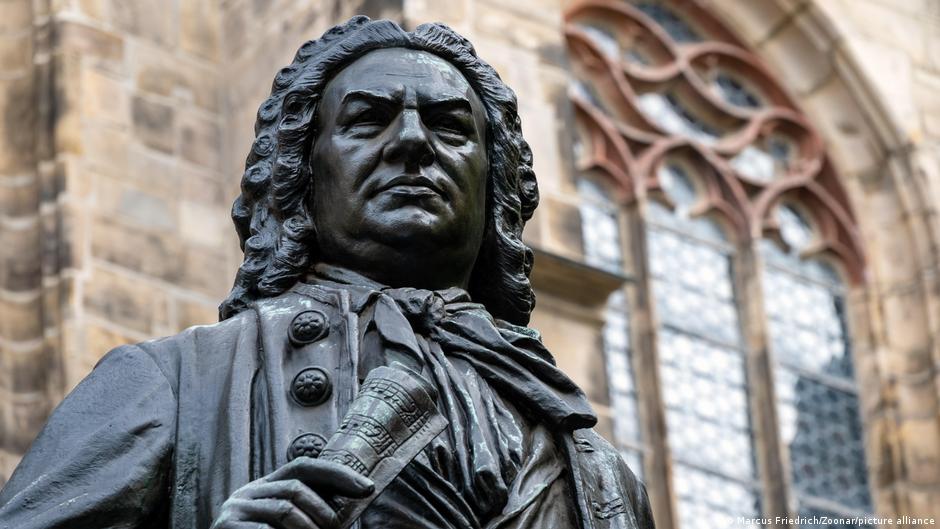
Leipzig Bach Festival Unveils Global Favorites
The Leipzig Bach Festival is set to honor the renowned composer Johann Sebastian Bach with a unique 'hit parade' featuring his most beloved cantatas. This initiative, which saw over 8,000 enthusiasts from 20 countries cast their votes, underscores the global reach and enduring popularity of Bach's musical legacy. The festival, running from June 11 to 21, will feature performances of the top 50 cantatas by distinguished ensembles, offering a fresh perspective on the classical master's repertoire.
Johann Sebastian Bach's extensive catalog includes a diverse range of compositions, from grand cantatas featuring timpani and trumpets to more intimate and emotionally resonant pieces. To ascertain which of his liturgical cantatas resonate most deeply with the international Bach community, the Leipzig Bach Festival organized a comprehensive poll. Participants, much like in the Eurovision Song Contest, allocated points to their preferred cantatas, with 12 points for their top choice, 10 for their second, and so forth. The final rankings are being kept under wraps until each respective concert, adding an element of suspense to the festival.
Artistic director Michael Maul shared an intriguing observation regarding the voting outcomes. He noted, "I was surprised that it wasn't necessarily the most grandiose, loudest and major-key cantatas that made it into the top 10, but rather the pieces that strike a very quiet and contemplative note, where the text deals with existential questions." Maul suggests this preference highlights why Bach's music continues to hold significant relevance for contemporary audiences. He did confirm, however, that celebrated cantatas such as "Lobet den Herrn" (Praise the Lord) and "Nun kommt der Heiden Heiland" (Savior of the nations, come) are well-represented within the top 50 selections.
The Legacy of the New Bach Society
Bach served as the Thomaskantor in Leipzig from 1723 until his passing in 1750, a period during which he directed the illustrious St. Thomas Choir. This choir traditionally inaugurates the Bach Festival each year. Leipzig is also home to the New Bach Society, an organization dedicated to the preservation and promotion of Johann Sebastian Bach's musical works.
The concept of organizing regular Bach festivals across various German cities, with a primary focus on his sacred music, originated with the New Bach Society in 1901. This idea subsequently inspired other cities to establish their own Bach festivals. The model of recurring festivals featuring a wide array of concerts also gained traction internationally. Despite interruptions caused by historical events like wars, the New Bach Society is commemorating its 100th Bach Festival this year, integrated within the larger Leipzig Bach Festival.
Global Reach of Bach Festivals
To mark this milestone, museum director Jörg Hansen curated an exhibition titled "Bach Festivals: A Phenomenon" at the Bachhaus in Eisenach, Bach's birthplace in 1685. Hansen and his team have identified 82 Bach festivals globally that operate either regularly or have had extended runs. Bethlehem, Pennsylvania, holds the distinction of hosting the most Bach festivals to date, with 118 events since 1912, according to Hansen. The newest Bach festival was established a decade ago in Jerusalem, Israel, while the largest Bach festivals outside Germany are found in Malaysia and the U.S. state of Oregon. The exhibition at the Bachhaus showcases a rich collection of historical artifacts, including programs, photographs, autographs, films, and audio recordings. Hansen noted, "We also have a display case full of souvenirs and program booklets, and there are the latest Bach Festival posters from 58 Bach Festival events worldwide."
Bach's Music Through History and Politics
The exhibition also delves into the complex history of Bach's music, including its controversial appropriation by the Nazis during the Third Reich. Following World War II, a fascinating dispute emerged as both East and West Germany sought to claim Johann Sebastian Bach as their own cultural icon. Hansen explained, "In communist East Germany, Bach was seen as a comrade of the workers and peasants who rebelled against the authorities and the church." While Bach did have disagreements with his ecclesiastical employer, these were primarily over salary and the selection of boys for the St. Thomas Choir. In contrast, during West Germany's post-war economic prosperity, Bach's music was often commercialized, with international stars and ensembles performing at Bach festivals. Despite these differing interpretations, the New Bach Society was permitted to hold its festivals annually, alternating between East and West. However, Hansen noted, "church services were no longer permitted in the official program of the Bach festivals."
At the 2026 Leipzig Bach Festival, particular emphasis will be placed on Bach's religious cantatas, not only through the 'hit parade' but also via a special "Family Choir" led by conductor and organist Rudolf Lutz. A remarkable 122 individuals from 20 countries are traveling to Leipzig specifically to perform Bach's cantatas.
This year's artist-in-residence is the Iranian-American harpsichordist Mahan Esfahani, for whom Bach is a paramount composer. Esfahani is currently recording Bach's complete harpsichord works and will present selections from Bach's secular repertoire in seven high-profile harpsichord concerts at the festival. Deutsche Welle will record the concert "Piano Exercises on the Harpsichord I" on June 12, making it available on the DW Classical Music YouTube channel. The Leipzig Bach Festival, themed "In Dialogue," continues until June 21, while the "Bach Festivals: A Phenomenon" exhibition at the Bachhaus in Eisenach runs through November 1, 2026.
Source: Original Article