Indian Delegation Attends Khamenei's Funeral
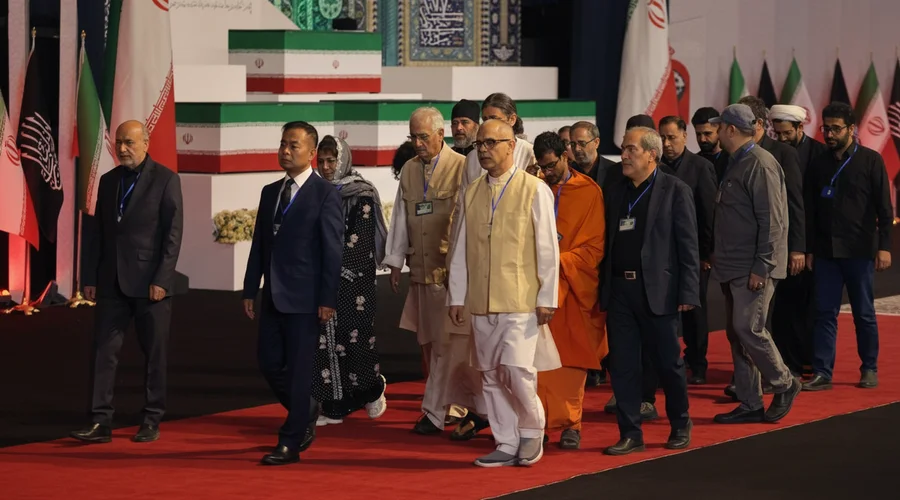
A high-level Indian delegation has arrived in Tehran to participate in the state funeral services for Iran's former Supreme Leader, Ayatollah Ali Khamenei. The delegation, led by Bihar Governor Syed Ata Hasnain and Deputy Foreign Minister Pabitra Margherita, underscores the historical and ongoing diplomatic ties between India and Iran. The official representation at the solemn event reflects India's recognition of the importance of maintaining its relationship with the Islamic Republic, despite complex regional dynamics.
The Indian Foreign Ministry issued a statement emphasizing that the presence of its representatives at the funeral highlights the 'civilizational ties' and 'people-to-people connections' that form the bedrock of political and economic engagements between the two nations. Other prominent Indian figures, including former Jammu and Kashmir Chief Minister Mehbooba Mufti and Congress Party leader Salman Khurshid, also paid their respects, with Mufti sharing her condolences on social media, describing her presence as an 'honour' to express solidarity.
Invitations for the funeral were extended to a broad spectrum of Indian dignitaries, including members from the ruling Bharatiya Janata Party (BJP), opposition Congress Party, and leaders from Indian-administered Kashmir. While Prime Minister Narendra Modi was also invited, he was unable to attend due to a pre-scheduled three-nation tour encompassing Indonesia, Australia, and New Zealand.
India-Japan Enhance Economic and Defense Partnership
Concurrently with the diplomatic mission to Tehran, India has been actively engaged in strengthening its strategic partnerships elsewhere. Japanese Prime Minister Sanae Takaichi concluded a three-day visit to India, during which significant agreements were reached with Indian Prime Minister Narendra Modi. A primary outcome of their discussions was the mutual decision to upgrade the Comprehensive Economic Partnership Agreement (CEPA), a pact that has been in effect for 15 years.
The existing CEPA, which came into force in 2011, has faced scrutiny for its perceived limited benefits, particularly for Indian exporters. During a press briefing, Indian Foreign Secretary Vikram Misri noted, "The existing CEPA between the two countries is somewhat dated, especially in the context of new trade arrangements that are now being struck across the world. We have in fact made the proposal to our Japanese colleagues in recent times that maybe it is time to look at the upgrade and review its provisions." Both leaders acknowledged the necessity of modernizing the agreement to reflect contemporary global trade environments and enhance bilateral economic advantages.
Beyond economic ties, the two nations also forged a groundbreaking defense co-development project. Prime Minister Modi announced the signing of an agreement for the first-ever joint defense project between India and Japan, focusing on a naval radio antenna. "This project for a naval radio antenna will open a new chapter in our defence technology partnership," Modi stated, as reported by The New Indian Express. This collaboration pertains to the Unified Complex Radio Antenna (UNICORN) project, which aims to develop a next-generation naval communications system designed to ensure secure and reliable communication for warships.
Broader Diplomatic Context
The simultaneous diplomatic activities underscore India's multifaceted foreign policy approach. While engaging in traditional diplomatic obligations such as attending state funerals, India continues to actively pursue strategic economic and defense collaborations with key global partners. The discussions with Japan included broader areas of cooperation, with agreements inked across critical sectors like artificial intelligence, defense, and energy, signifying substantial investments and a deepening of bilateral relations.
This period of intense diplomatic activity highlights India's commitment to navigating a complex international landscape, balancing its historical relationships with emerging strategic imperatives. The decisions made and agreements signed during this time are poised to influence India's geopolitical standing and economic trajectory in the coming years.
Source: Original Article