Commemorating a Literary Visionary
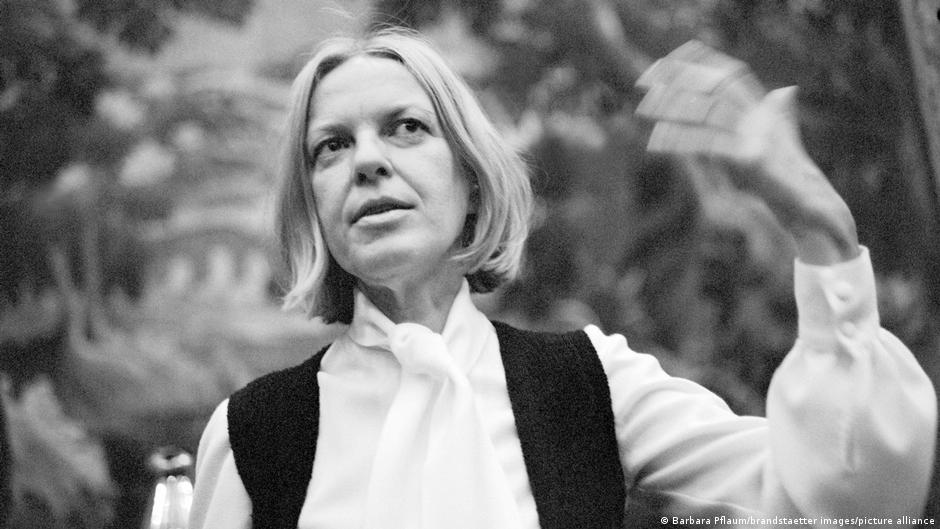
As the literary world marks what would have been the 100th birthday of Austrian poet and author Ingeborg Bachmann, her work continues to resonate with profound relevance. Bachmann, a luminary of post-war German-language literature, is celebrated for her incisive critiques of patriarchal systems, the complexities of human relationships, and the subjugation of women. Her insights, particularly regarding gender dynamics and societal structures, were remarkably ahead of their time, as noted by Regina Schilling, director of the new documentary, "Ingeborg Bachmann: Someone who was once me."
Schilling's research for the film underscored the enduring contemporary nature of Bachmann's writings, emphasizing her foresight in addressing themes pertinent to modern social discourse, including gender identity and what is now commonly referred to as "mansplaining." Bachmann's ability to articulate these nascent concepts firmly establishes her as a visionary.
Challenging Linguistic and Societal Norms
Born in Klagenfurt, Austria, in 1926, Bachmann's personal history, including her father's early affiliation with the Nazi Party, deeply influenced her literary output. Though she rarely spoke publicly about this aspect of her past, it fueled her exploration of collective guilt, trauma, and the pervasive nature of patriarchal violence. Her journey from her provincial hometown to Vienna symbolized a crucial step toward personal emancipation, a move she described as her most significant voyage.
A scholar of philosophy, psychology, and German literature, Bachmann's doctoral thesis focused on Martin Heidegger, and she was also an authority on Ludwig Wittgenstein. Wittgenstein's philosophy posited that certain truths are inexpressible and best met with silence. Bachmann, however, dedicated her literary career to refuting this notion, striving to articulate "the unsayable, the mystical, the limit" through her evocative prose and poetry. Her work consistently challenged the conventional understanding of language, viewing it not merely as a tool for communication but as a construct that upholds existing power structures. As a narrator in her story "Among Murderers and Madmen" declares, "No new world without a new language."
A Prominent Voice in Post-War Literature
Bachmann's professional journey began at the radio station of the US occupation forces in Vienna, which led to her involvement with Gruppe 47, an influential avant-garde literary collective. This informal association, established in 1947, aimed to cleanse German literature of Nazi propaganda and corruption, fostering new talents like Heinrich Böll and Günter Grass. Bachmann quickly distinguished herself, winning the prestigious Gruppe 47 Literature Prize in 1953 for her debut poetry collection, "Die gestundete Zeit" (Borrowed Time). Her works from this period were characterized by their blend of haunting beauty and stark violence. She also achieved acclaim for her radio plays.
Her sole completed novel, "Malina," published in 1971, is widely considered her masterpiece. This intricate work delves into the psychological fragmentation of a female writer navigating a strained love triangle in Vienna, offering a profound exploration of identity and relationship dynamics. Bachmann was engaged in a multi-volume project titled "Ways of Dying" when she tragically passed away at the age of 47 in 1973, following complications from an accidental fire in her Rome apartment. Her untimely death further solidified her legendary status, mirroring the themes of existential unraveling and trauma that pervaded her writing.
Intertwined Lives and Legacies
Bachmann's personal relationships, particularly her intellectual and romantic entanglements, significantly contributed to her public persona. Her complex correspondence with Romanian Jewish poet and Holocaust survivor Paul Celan, despite his marriage to another, spanned years and documented a poignant love story between individuals from starkly different backgrounds—Celan, whose parents perished in the Holocaust, and Bachmann, the daughter of an early Nazi Party member.
She also shared a profound, albeit platonic, partnership with Hans Werner Henze, a leading contemporary German composer. Their collaborations on operas and even considerations of marriage highlighted a deep artistic and personal bond, though it ultimately ended due to Henze's homosexuality. Another significant relationship was with Swiss playwright and novelist Max Frisch. Their intense intellectual exchange, documented in letters only published in 2022, revealed the emotional complexities and distress caused by their open relationship and other affairs, making them one of German-language literature's most famous couples.
Enduring Influence and New Interpretations
The centennial of Bachmann's birth is being marked by several new works. Regina Schilling's documentary, featuring Oscar-nominated actress Sandra Hüller, integrates archival footage, interviews with Bachmann, and dramatic readings of her texts. This follows Margarethe von Trotta's 2023 biopic, "Journey into the Desert Country," starring Vicky Krieps.
Additionally, Andrea Scholl's new autobiography, "Zwei Menschen sind in mir" (Two People Are Within Me), draws on recently published letters and diary entries. The title itself encapsulates the central tension of Bachmann's life: the dichotomy between her identity as an uncompromising, brilliant intellectual and her personal struggles with addiction, isolation, and self-doubt. Despite the extensive body of work analyzing her life and writing, Bachmann remains an enigmatic figure, much like her modernist masterpiece "Malina"—a work that is simultaneously vulnerable and brave, elegant and sharp, eerie yet profoundly human.
Source: Original Article