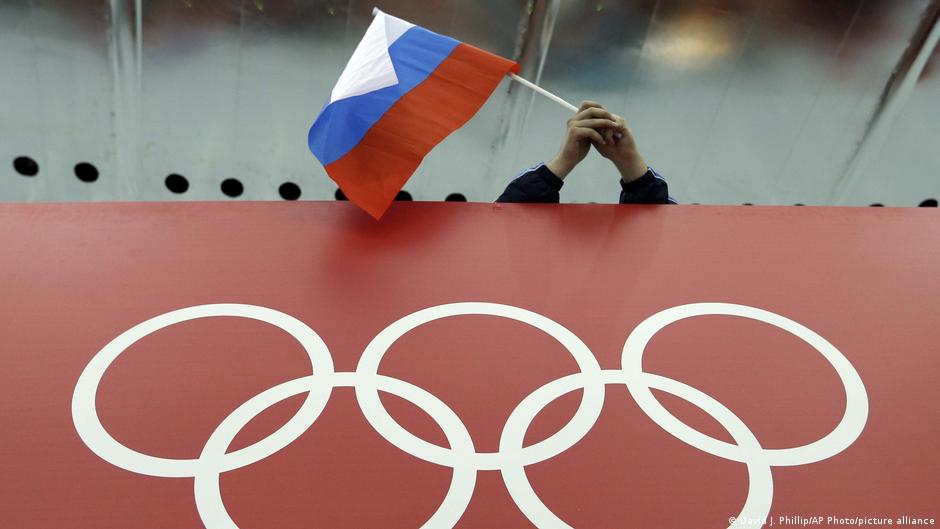
IOC Revisits Restrictions on Russian Athletes
The International Olympic Committee (IOC) recently declared a change in its policy regarding the participation of Russian athletes in international sporting events. This decision will permit Russian athletes to compete in team disciplines and engage in qualifying rounds for the Los Angeles 2028 Olympic Games. The move follows a similar decision made two months prior concerning Belarusian athletes, who were also granted permission to compete without national symbols.
Since Russia's military actions in Ukraine began in 2022, Russian athletes have largely been excluded from global sports. The IOC had previously suspended Russia's Olympic Committee in 2023, a consequence of Russia's recognition of regional sports organizations within Ukrainian territories that were annexed in 2022. Despite these broader suspensions, certain Russian athletes were allowed to compete as 'neutral athletes' in the 2024 Paris Olympics and the 2026 Milano Cortina Winter Games. This participation was contingent on their non-support for the conflict and a lack of affiliation with Russian military or security forces.
Rationale Behind the IOC's Decision
In a formal statement, the IOC indicated that an extensive review by its Legal Affairs Commission found that the Russian Olympic Committee (ROC) no longer included regional sports organizations situated in territories under the jurisdiction of Ukraine's National Olympic Committee (NOC) as its members. Kirsty Coventry, an IOC official, addressed the media, reiterating the committee's opposition to "any kind of violence and war" and its continued support for Ukraine. However, she emphasized the principle that athletes should not be unfairly penalized for geopolitical events.
Russian Sports Minister Mikhail Degtyarev expressed approval of the IOC's updated stance, viewing it as a positive step towards the full reintegration of Russian athletes into the international sports arena. Degtyarev stated, "Our country's return to the Olympic family is a green light for international federations to reinstate all our athletes."
Continued Restrictions and Oversight
Despite the eased restrictions, the IOC has stipulated that Russian athletes will still be subjected to stringent anti-doping protocols. This measure aims to "address the lack of confidence in the global sporting community relating to the return of Russian athletes to international competition." Furthermore, the IOC confirmed that it would not host any of its events in Russia, nor would it extend invitations to Russian government or state officials for its gatherings.
Crucially, the prohibition on the display of the Russian national flag and the playing of its national anthem remains in effect for the foreseeable future. Coventry underlined the importance of providing athletes with the opportunity to compete, stating, "We made it clear that all athletes had the possibility to compete at the Olympic Games. This is what this decision speaks to. It allows Russian athletes to take part in sports competitions. We thought it was really important for athletes to have that possibility."
She also elaborated on the revised neutrality bylaw, noting that athlete selection would not solely depend on sporting prowess but also on their capacity to serve as positive role models. This suggests a broader assessment criterion beyond mere athletic performance.
The decision by the IOC reflects a complex balancing act, aiming to uphold the principle of athlete participation while navigating the ongoing geopolitical tensions. It signals a cautious re-engagement with Russian athletes under specific conditions, maintaining certain symbolic restrictions to acknowledge the broader context of the conflict.
Source: Original Article