Tehran Court Affirms Verdict Against Panahi
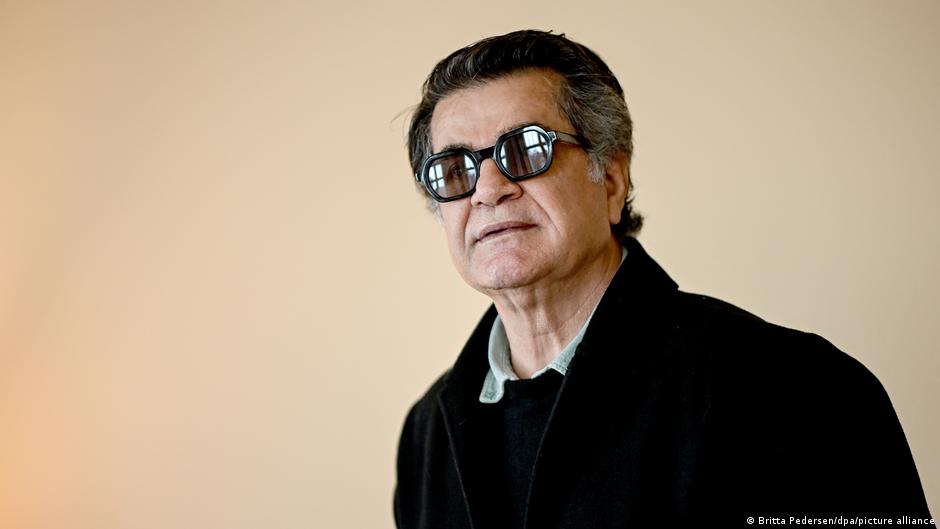
A recent ruling by a Revolutionary Court in Tehran has solidified a one-year prison sentence against the acclaimed Iranian filmmaker, Jafar Panahi. The verdict, initially delivered in absentia while Panahi was abroad, also includes a two-year prohibition on international travel and a ban on his participation in political and social organizations. Mostafa Nili, Panahi's legal representative, conveyed these details to the Iranian media outlet Emtedad on Sunday.
The court's justification for its decision reportedly stems from accusations that Panahi engaged in 'propaganda against the Islamic Republic of Iran.' Specific actions cited include the creation of an 'underground and problematic film against the establishment,' expressing solidarity with political prisoners, and offering support for public demonstrations opposing the government, notably the 'Woman, Life, Freedom' movement.
The initial judgment was issued while Panahi was overseas, engaged in promotional activities for his film, 'A Simple Accident,' and receiving accolades at the Gotham Awards in New York. Following its triumph with the Palme d'Or at the 2025 Cannes Film Festival and its selection to represent France at the Academy Awards, Panahi made the decision to return to Iran on March 30, despite the existing in-absentia sentence.
A History of Confrontation with Iranian Authorities
Jafar Panahi's career has been frequently marked by official censure and incarceration within Iran, despite his consistent assertion that his primary motivation is not political filmmaking. In an interview with DW during the 2025 Cannes festival, Panahi articulated his perspective: "In my definition, a political filmmaker defends an ideology where the good follow it and the bad oppose it. In my films, even those who behave badly are shaped by the system, not personal choice."
However, for more than a decade, Panahi has found himself in an ongoing struggle with the authorities. In 2010, after he voiced support for the opposition Green Movement protests, Iranian officials imposed a sweeping 20-year ban on his filmmaking activities and international travel. Despite these severe restrictions, Panahi continued to create. He ingeniously developed methods to clandestinely shoot, edit, and distribute his films. Examples include transforming his living room into a film set for 'This Is Not a Film' (2011) and utilizing a car as a mobile studio for 'Taxi,' which earned the Golden Bear at the 2015 Berlinale.
His challenges escalated in July 2022 when he was apprehended and detained in Tehran's notorious Evin prison. After enduring nearly seven months of imprisonment and undertaking a hunger strike, he was eventually released in February 2023. A significant legal victory followed when Iran's Supreme Court overturned his original 2010 sentence, granting him legal freedom, though his artistic endeavors remained constrained by the system he has consistently resisted.
Filmmaking as an Unyielding Imperative
Panahi has often spoken about the challenges of creating films under the restrictive Iranian system. "To make a film in the official way in Iran, you have to submit your script to the Islamic Guidance Ministry for approval," he explained to DW. "This is something I cannot do. I made another clandestine film. Again."
This steadfast commitment led to his latest work, 'It Was Just An Accident,' which many consider his most direct confrontation with state repression. Filmed in secret and featuring female characters without headscarves, in direct defiance of Iran's hijab laws, the movie explores the story of former prisoners who believe they have located their torturer and must decide on a course of action. This intense 24-hour drama unfolds with the tension of a psychological thriller.
Despite a career defined by acts of artistic defiance, Panahi maintains that filmmaking is not a choice but an inherent part of his being. "During my 20-year ban, even my closest friends had given up hope that I would ever make films again," he remarked at the Cannes press conference for 'It Was Just An Accident' in May 2025. "But people who know me know I can't change a light bulb. I don't know how to do anything except make films."
He recounted a moment of despair after receiving his original 20-year sentence. "I remember just before I was given this very heavy sentence... I thought: 'What will I do now?' For a little while, I was really upset," he recalled. "Then I went to my window, I looked up and I saw these beautiful clouds in the sky. I immediately got my camera. I thought: 'This is not something they can take away from me, I can still take pictures of the clouds.'" These photographs were later exhibited at the Centre Pompidou in Paris, underscoring his belief that "There's no way they can stop me from making films. If cinema is really what is sacred for you, what gives sense to your life, then no regime, no censorship, no authoritarian system can stop you."
Panahi's Unwavering Commitment to Iran
While many Iranian filmmakers, including his close friend Mohammad Rasoulof, who now resides in Germany, have sought refuge in exile, Panahi has consistently expressed his intention to remain in Iran. "I'm completely incapable of adjusting to another society," he stated, citing his difficulties during a three-and-a-half-month stay in Paris for post-production work, which he described as feeling like he 'was going to die.'
Panahi explained that filmmaking in Iran is a collaborative, improvisational, and trust-based process. "At 2 a.m., I can call a colleague and say: 'That shot should be longer.' And he'll come join me and we'll work all night. In Europe, you can't work like this. I don't belong." His deep connection to his homeland and its unique creative environment remains a driving force behind his decision to stay, despite the personal and professional risks involved.
Source: Original Article