
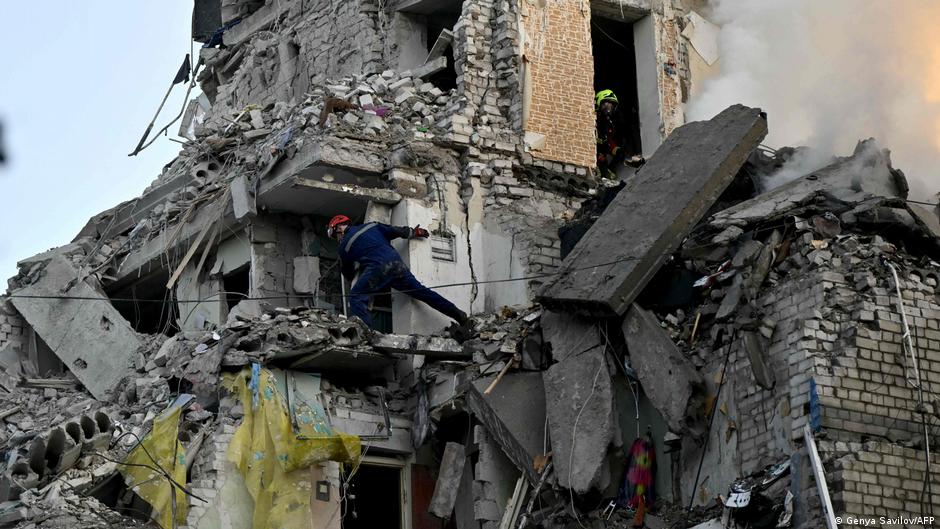
Extensive Aerial Assault Targets Ukrainian Capital
The Ukrainian capital, Kyiv, faced a significant aerial bombardment overnight, described by city officials as one of the most intense since the onset of the ongoing conflict. The coordinated strikes, involving a combination of drones, ballistic, and cruise missiles, resulted in at least 27 fatalities and left over 90 individuals injured. Rescue operations continued throughout the night as emergency services meticulously searched through debris and damaged structures for survivors and additional casualties.
Vitali Klitschko, Kyiv's mayor, characterized the overnight offensive as the "most massive enemy attack." According to the Ukrainian Air Force, Russia deployed approximately 570 aerial objects, with nearly 500 of these identified as drones. The assault also included 24 Iskander ballistic missiles and around 50 cruise missiles of various types, notably featuring four Zircon hypersonic guided missiles, typically designed for naval targets. This extensive deployment underscores the scale and intensity of the recent Russian military actions.
Widespread Damage and Humanitarian Impact
The impact of the attacks was widespread across Kyiv. Reports indicated a hotel roof catching fire on the central Shevchenko Boulevard, and a direct hit caused the partial collapse of six floors of an apartment building. Andrii Sybiha, the Foreign Minister, conveyed the gravity of the situation, labeling it a "night of horror" for the capital. Emergency crews were documented sifting through the wreckage of a collapsed nine-story building, highlighting the destructive power of the munitions used.
Tymur Tkachenko, head of Kyiv's military administration, reported that approximately three dozen locations across the city sustained damage during the roughly 11-hour-long assault. In response to air raid warnings, over 50,000 residents sought refuge in subway stations, as confirmed by the Kyiv Metro, demonstrating the immediate public response to the threat. The humanitarian toll is expected to rise as search and rescue efforts persist.
President Zelenskyy Appeals for Enhanced Air Defense
Ukrainian President Volodymyr Zelenskyy confirmed that the Russian attacks extended beyond Kyiv, impacting other regions including Kharkiv, Sumy, Dnipro, Zaporizhzhia, and Cherkasy. He noted that five people, including a child, were wounded in the Kharkiv region, and two more in the Kyiv region, where civilian infrastructure was also targeted. These widespread strikes underscore a broader strategy of targeting critical and civilian facilities across Ukraine.
In light of the escalating attacks, President Zelenskyy reiterated Ukraine's urgent appeal for advanced air defense systems, specifically mentioning Patriot missiles and related technologies. He emphasized the critical need for decisions from allies, particularly the United States, regarding licenses for Patriots and other forms of military cooperation. Zelenskyy articulated that such support is crucial not only for defending against current attacks but also for potentially de-escalating the broader conflict. The President affirmed Ukraine's resolve to retaliate against Russia's actions, making these statements during a visit to a partially destroyed apartment building in Kyiv. His visit followed an early return from Dublin, Ireland, prompted by intelligence indicating an imminent major Russian assault.
Context of Retaliation and Evolving Warfare
Russia has stated that these recent drone and missile attacks were conducted in retaliation for Ukrainian drone strikes that targeted Moscow earlier in the week. This tit-for-tat escalation follows a significant Ukrainian drone assault on a major oil refinery in the Moscow region, marking one of the largest drone attacks on the Russian capital since the full-scale invasion began in 2022. Historically, Russia has targeted Ukraine's energy infrastructure and other critical facilities throughout the conflict. However, Ukraine has demonstrated an increasing capability to produce advanced long-range drones, enabling strikes deep within Russian territory.
A recent analysis by the Center for Strategic and International Studies (CSIS) highlighted the evolving nature of warfare, suggesting that over 90% of Russian casualties, by some estimates, have resulted from drone attacks rather than direct human-to-human engagements. The CSIS study also provided estimates for the human cost of the conflict, indicating that Russian forces have suffered approximately 1.4 million battlefield casualties (killed, wounded, or missing) and between 400,000 and 450,000 fatalities from February 2022 to June 2026. During the same period, Ukrainian forces are estimated to have incurred between 525,000 and 625,000 casualties and between 125,000 and 150,000 fatalities. These figures suggest that more than two million Russian and Ukrainian soldiers have been killed or wounded since the war's commencement, underscoring the severe human toll of the protracted conflict.
Source: Original Article