Bach's Enduring Relevance in Contemporary Society
In an increasingly interconnected yet often fractious world, the ability to engage in meaningful dialogue, to debate constructively, and to truly listen has become more critical than ever. Global conflicts and societal divisions underscore the urgent need for platforms that encourage these fundamental human skills. The recent Leipzig Bach Festival, an annual event celebrating the profound legacy of Johann Sebastian Bach, demonstrated how the celebrated composer's music can serve as a powerful catalyst for such engagement, offering a unique model for fostering understanding and communication amidst contemporary challenges.
The festival, held in the city where Bach spent a significant portion of his career, moved beyond a mere celebration of historical music. It consciously positioned Bach's work as a living, breathing entity capable of addressing modern concerns. Organizers articulated a vision wherein Bach's intricate compositions, with their inherent structures of interplay and resolution, could metaphorically represent the dynamics of human interaction and the potential for harmony even amid complexity.
The Bach Festival's Thematic Focus: 'Choral Worlds'
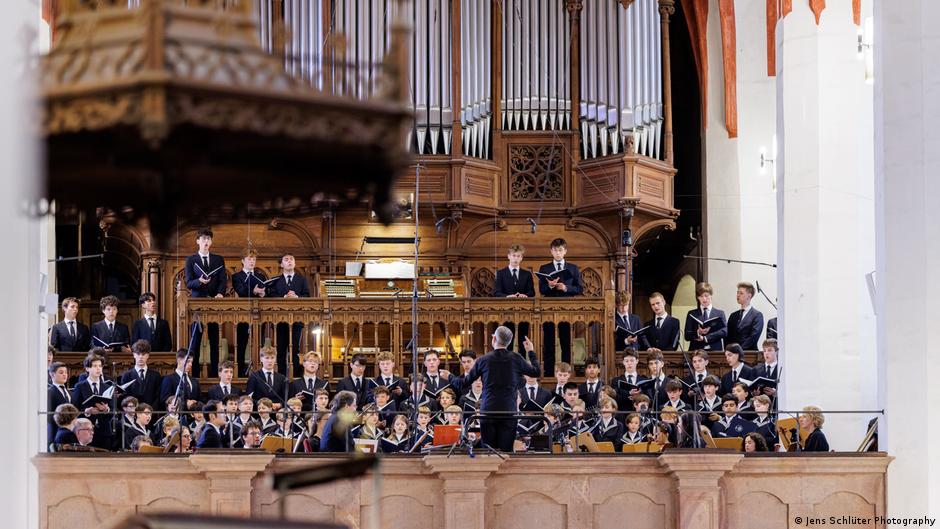
This year's festival, themed 'Choral Worlds,' placed a particular emphasis on Bach's choral works, which are renowned for their multifaceted vocal lines and their capacity to weave individual voices into a cohesive and transcendent whole. This thematic choice was not arbitrary; it was a deliberate statement on the power of collective expression and the beauty that emerges when diverse elements converge in a shared purpose. The chorales, cantatas, and passions performed during the festival showcased Bach's genius in orchestrating multiple voices, each distinct yet contributing to a larger, unified soundscape.
Within these 'Choral Worlds,' the festival sought to illustrate how different musical parts, much like different viewpoints in a discussion, can coexist, interact, and ultimately create something greater than the sum of their individual components. The intricate counterpoint and fugal structures characteristic of Bach's style inherently demand a form of musical dialogue, where themes are introduced, responded to, and developed through a process of call and response, imitation, and variation. This musical architecture provides a compelling analogy for effective communication, where ideas are exchanged, built upon, and refined.
Music as a Universal Language for Connection
One of the core tenets explored during the festival was the idea of music as a universal language, capable of transcending cultural and linguistic barriers. Bach's music, in particular, with its profound emotional depth and intellectual rigor, has resonated with audiences across centuries and continents. The festival invited musicians and listeners from diverse backgrounds, creating an environment where shared appreciation for artistic excellence could bridge differences.
This aspect is especially pertinent in today's global landscape, where misunderstandings often arise from a lack of shared context or an inability to empathize with differing perspectives. By engaging with Bach's music, attendees were encouraged to listen intently, to discern individual musical lines while simultaneously appreciating their contribution to the whole. This active and empathetic listening, honed in the musical context, was presented as a transferable skill vital for fostering productive dialogue in broader societal contexts.
"Bach's music, with its complex yet harmonious structures, offers a timeless blueprint for how disparate elements can come together to form a coherent and beautiful whole. It's a powerful metaphor for the kind of dialogue we desperately need in our world today." - A festival participant reflecting on the event's message.
Beyond Performance: Fostering Active Engagement
The Leipzig Bach Festival extended its mission beyond traditional concert performances. It incorporated lectures, workshops, and discussions that explicitly linked Bach's musical principles to contemporary issues of communication and conflict resolution. Experts from various fields, including musicology, philosophy, and sociology, contributed to a broader conversation about the role of art in fostering understanding.
Participants were encouraged to reflect on how the principles embedded in Bach's compositions – such as balance, proportion, thematic development, and the interplay of independent voices – could inform approaches to complex social and political debates. The festival thus became a forum not just for listening to music, but for actively contemplating its deeper implications for human interaction.
A Model for Harmonious Coexistence
In conclusion, the Leipzig Bach Festival served as a powerful reminder of the enduring relevance of classical music, not merely as an aesthetic pursuit but as a profound resource for navigating the complexities of modern life. By emphasizing the inherent dialogue within Bach's compositions, the festival offered a compelling model for how individuals and societies can learn to communicate more effectively, to listen more attentively, and to seek harmony amidst discord. It underscored that the skills of talking, debating, and listening, so essential for resolving global conflicts, can be nurtured and refined through engagement with the timeless artistry of Johann Sebastian Bach.
Source: Original Article