Introduction to the Disputed Territories
The Senkaku Islands, known as Diaoyu Islands in China, are a group of uninhabited islets situated in the East China Sea. This archipelago, approximately 170 kilometers (105 miles) northeast of Taiwan, has been a focal point of contention between Japan and China for decades. Both nations lay claim to the islands, citing historical and geographical arguments. The dispute over sovereignty is not merely about the landmasses themselves but also encompasses control over rich fishing grounds and potential undersea natural resources, including oil and natural gas, believed to be abundant in the surrounding waters. The strategic location of the islands further exacerbates their significance, contributing to regional geopolitical complexities.
Recent Maritime Incident
A recent encounter between Japanese and Chinese coast guard vessels has brought renewed attention to this long-standing territorial dispute. According to reports, the incident occurred in the waters adjacent to the contested islands. Both the Japan Coast Guard and the China Coast Guard issued statements regarding the confrontation, each claiming to have successfully asserted their authority and compelled the other's vessels to depart from the area. Such incidents, while not uncommon, underscore the persistent friction and the potential for escalation in the region.
Japan's Perspective on the Incident
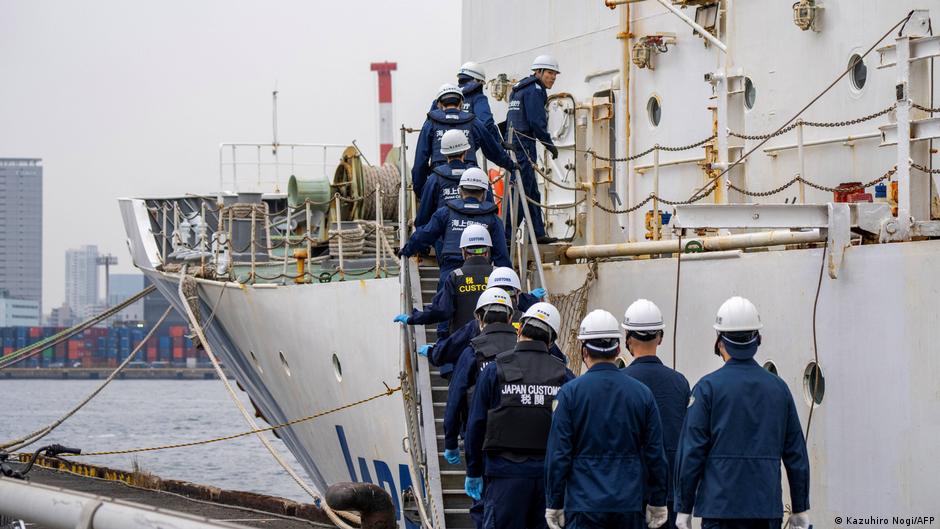
Japanese authorities reported that their coast guard vessels were engaged in monitoring the activities of Chinese ships within what Japan considers its territorial waters around the Senkaku Islands. The Japan Coast Guard asserted that the Chinese vessels were operating unlawfully and were instructed to leave the area. Japan maintains that the Senkaku Islands are an inherent part of its territory, a stance supported by its historical administration of the islands since the late 19th century and its subsequent incorporation into Okinawa Prefecture. Tokyo views any Chinese presence in these waters as an infringement on its sovereignty and a violation of international law. The Japanese government has consistently called for China to respect the status quo and refrain from provocative actions.
China's Counter-Narrative
Conversely, the China Coast Guard presented a different account of the events. Chinese officials stated that their vessels were conducting routine patrols in waters that China considers its sovereign territory. Beijing refers to the islands as Diaoyu and asserts that they have been an integral part of China since ancient times. The Chinese government views Japan's claims as illegitimate and its administration of the islands as an illegal occupation. In their statement regarding the recent incident, Chinese authorities claimed to have expelled Japanese vessels from the area, emphasizing their determination to protect China's territorial integrity and maritime rights. China's actions are often framed domestically as necessary measures to uphold national sovereignty against foreign encroachment.
Historical Context of the Dispute
The roots of the Senkaku/Diaoyu dispute can be traced back to the late 19th century. Japan officially annexed the islands in 1895 following the First Sino-Japanese War. After World War II, the islands were administered by the United States as part of the Ryukyu Islands, before being returned to Japan in 1972. China, however, began to assert its claims more vigorously in the 1970s, particularly after geological surveys indicated the potential for significant oil reserves in the area. Taiwan also maintains a claim to the islands, further complicating the regional dynamics. The lack of a definitive international resolution has allowed the dispute to fester, leading to periodic confrontations.
Implications for Regional Stability
The ongoing maritime standoff near the Senkaku/Diaoyu Islands carries significant implications for regional stability in East Asia. Both Japan and China are major economic and military powers, and any direct conflict could have far-reaching consequences. The presence of coast guard vessels from both nations in close proximity creates a risk of miscalculation or accidental escalation. Furthermore, the United States, a key ally of Japan, has reiterated its commitment to the defense of the Senkaku Islands under the US-Japan Security Treaty, adding another layer of complexity to the situation. The international community closely monitors these developments, recognizing the potential for the dispute to disrupt global trade routes and impact broader geopolitical balances. Diplomacy and de-escalation remain crucial to managing these persistent tensions.
Source: Original Article