A New Era for Islamic Theology in European Academia
The University of Münster in Germany is making headlines as it prepares to inaugurate Europe's first independent Faculty of Islamic Theology within a public university setting. This groundbreaking initiative, scheduled for full operation with the opening of its 'Campus of Religions' in 2027, signifies a pivotal moment for religious studies and interfaith dialogue across the continent and beyond.
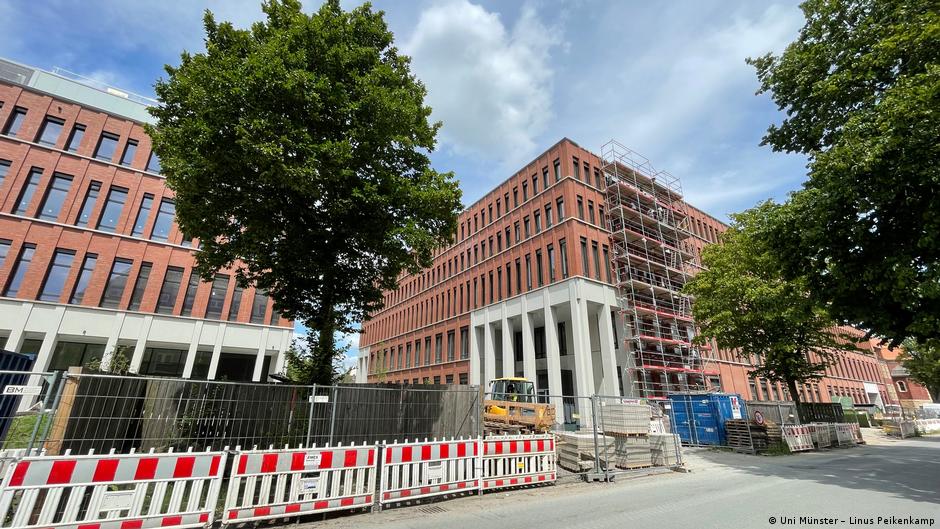
The ambitious 'Campus of Religions' project, which has been under construction since 2021, aims to consolidate the faculties of Catholic, Protestant, and Islamic Theology, alongside the Department of Religious Studies, into a single integrated complex. This co-location is designed to foster greater collaboration and understanding among different religious and academic traditions.
From Center to Faculty: A Decade of Growth and Vision
Professor Mouhanad Khorchide, an Austrian sociologist and Islamic theologian, has been instrumental in this development. Reflecting on 15 years of dedication to Islamic studies at Münster, Khorchide expressed deep gratitude for the achievement, acknowledging the significant responsibility that accompanies it. "We want to make the most of this unique opportunity and advocate for an open-minded, enlightened understanding of Islam," he stated, anticipating the faculty's far-reaching influence across Europe and the Muslim world.
Khorchide, who previously directed the Center for Islamic Theology (ZIT) at the university, has now assumed the role of founding dean for the newly established Faculty of Islamic Theology. This transition from a center to a full faculty represents a substantial upgrade in academic status, granting Islamic theology an unprecedented level of autonomy and recognition within the university framework. Historically, the ZIT operated under the auspices of another faculty, limiting its independent academic functions.
Empowering Academic Advancement and Future Generations
With its newfound faculty status, Islamic Theology at Münster will gain the authority to confer its own doctorates and habilitations. This capability is crucial for nurturing a new generation of scholars, ensuring the long-term academic legacy of Islamic studies, and facilitating the acquisition of external research funding. The elevation is not merely an administrative change but a strategic move to solidify the academic standing of Islamic theology.
Khorchide vividly recalls the humble beginnings of the ZIT in 2012, which started with only 15 students and three staff members. Today, the center boasts eight professors and over 50 staff members, with student enrollment projected to exceed 500 in the coming years. This anticipated growth is partly driven by the increasing demand for qualified teachers in Islamic religious education within German public schools. For instance, North Rhine-Westphalia, Germany's most populous state where Münster is located, requires up to 3,000 such teachers but currently employs only around 330, indicating a significant career path for graduates.
Expanding Horizons: Specializations and Guiding Principles
Looking ahead to 2027, Professor Khorchide plans to introduce a master's program focused on "Islam and Social Work." This specialization aims to address the growing need for professionals in areas such as youth services, hospital chaplaincy, and elder care, integrating Islamic perspectives into social welfare practices.
The faculty's core guiding principles underscore its commitment to the compatibility of faith and democracy, promoting a scholarly and contemporary interpretation of the Quran, and fostering robust interreligious dialogue. Crucially, the faculty explicitly condemns extremism, antisemitism, and Islamism, asserting, "We oppose every form of religiously motivated violence and ideological manipulation." This stance positions the faculty as a beacon for progressive Islamic thought.
Global Impact and Symbolic Significance
The establishment of this faculty has garnered considerable international attention, with media outlets from Africa to Asia reporting on the development. Khorchide highlighted particular interest from Indonesia, the nation with the world's largest Muslim population, suggesting a global yearning for an open-minded approach to Islam. He believes Münster could play a significant role in shaping the broader discourse on the future evolution of Islam worldwide.
Norbert Robers, the university spokesperson, emphasized Münster's historical strength in theology. He noted the profound symbolic power of bringing together the two Christian theological faculties and the new Islamic theology faculty under one roof, sharing facilities like a library and cafeteria. While the upgrade to faculty status might seem administrative, Robers stressed its substantial legal and institutional implications.
A ceremonial opening is planned for September 24 in the university's main hall. Annette Schavan, a former German federal minister of education (2005-2013) and a key figure in establishing Islamic theology at German universities, hailed this development as a "milestone." Writing for Domradio, a Catholic portal based in Cologne, Schavan posited that the new faculty would not only strengthen academic theology generally but also achieve widespread recognition across Europe.
Source: Original Article