Diplomatic Overtures and Lingering Threats in the Strait of Hormuz
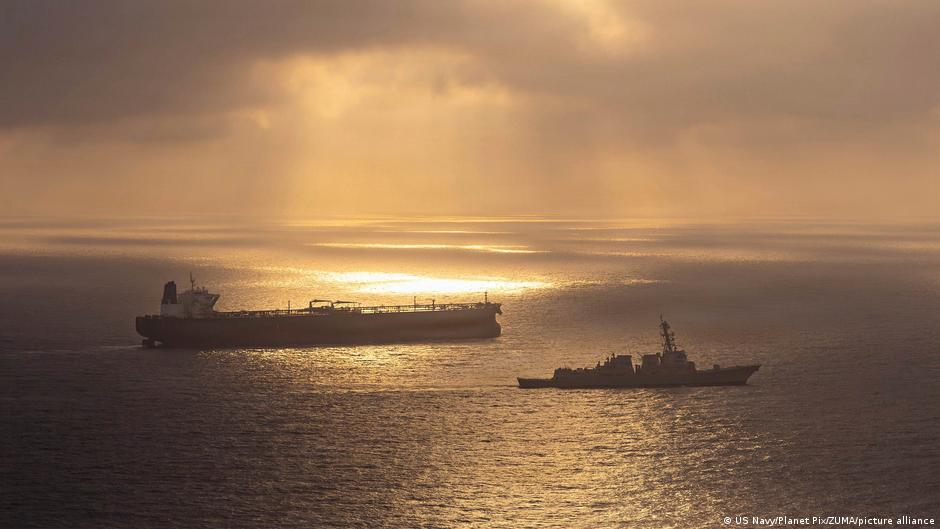
Recent diplomatic efforts have seen numerous international leaders, including those from Germany, France, the United Kingdom, and Italy, endorse a proposed peace agreement between the United States and Iran. These nations have signaled their readiness to lift sanctions against Iran, emphasizing the critical need to reopen the Strait of Hormuz for commercial shipping. In a joint declaration, the four countries committed to a 'strictly defensive and independent mission' to ensure the safety of maritime trade and conduct essential mine clearance operations in the region.
However, even with the prospect of reopening this vital waterway, the Persian Gulf and its surrounding areas continue to pose significant risks for merchant vessels. In early April, the Iranian Revolutionary Guard announced that Tehran had deployed mines within the strait. Johannes Peters, an expert in undersea warfare at Kiel University's Institute for Security Policy, noted the uncertainty surrounding the actual presence of these mines. He stated, "We aren't even certain that there are mines [in the Strait of Hormuz]. But the underlying threat is enough [to deter passage]. For now, nobody in the war zone can actually go and check." This ambiguity alone is sufficient to disrupt shipping and maintain a state of heightened alert.
Understanding Naval Mines: Evolution and Mechanisms
Naval mines are cost-effective underwater explosive devices engineered to detonate when a vessel approaches. They are categorized primarily by their deployment method:
- Drifting mines: These float freely on or near the water's surface.
- Moored mines: Anchored to the seafloor, these mines float beneath the water's surface.
- Bottom mines: These mines rest directly on the seafloor.
Historically, during World War II, moored mines equipped with contact-triggered switch horns were standard, a design derived from German mines developed in World War I. However, Peters highlights the vast difference between these older models and modern devices. Contemporary mines no longer rely on physical contact for detonation. Instead, their firing mechanisms can be activated by various triggers, including specific magnetic signatures, underwater sound waves, or changes in underwater pressure caused by passing ships. To target particular vessel types, mines can be programmed using acoustic profiles. Peters explained, "submarines can help determine the acoustic profile of a hostile ship. These hostile vessels will trigger the mines with their acoustic signatures, while friendly ships can continue to pass through the mined area without any trouble."
The Laborious Process of Mine Clearance
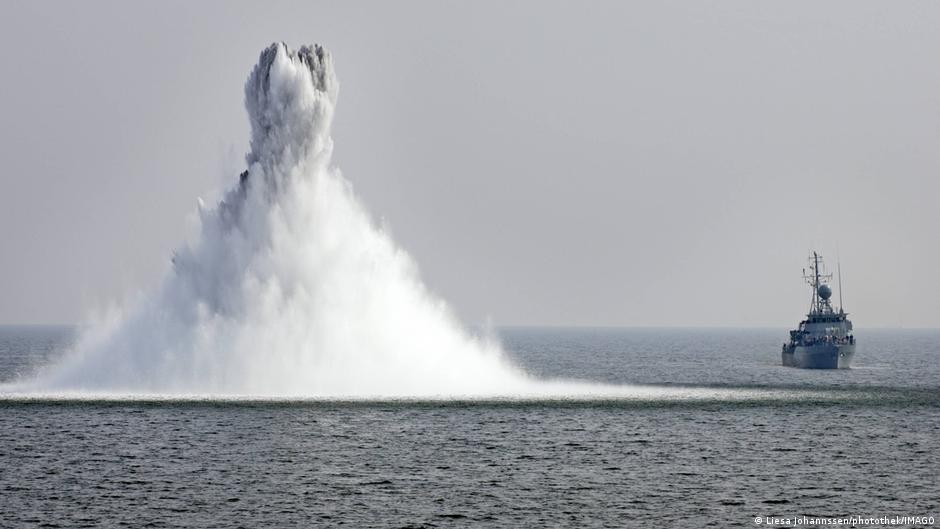
The neutralization of naval mines, encompassing both mine hunting and mine sweeping, is an inherently time-consuming and complex endeavor. The initial step involves locating suspicious objects, followed by expert assessment to determine if they pose a threat. Should a threat be confirmed, several options are available: specialists may recover the mine, disarm it, or initiate a controlled underwater explosion. Peters likened this process to an "underwater ordnance clearing service."
Recent technological advancements, however, are offering new avenues for clearing mines with reduced risk to human life. Ukrainian soldier Mykola, part of a task force clearing Russian-placed naval mines in the Black Sea, shared his experience: "When possible, we use drones to search for objects, then identify and destroy them."
Germany's Approach: Drone Technology in Mine Hunting
The German navy has also adopted drone technology for mine hunting operations. Frigate Captain Andreas, from the 3rd Minesweeping Squadron, whose full name cannot be disclosed for security reasons, stated, "We predominantly use autonomous systems to search the seafloor." He elaborated on the significant safety improvement: "In the past, boats equipped with sonar systems would have to pass straight over areas where mines were suspected to detect them. Autonomous systems mean those 40 lives no longer have to be put at direct risk."
These drones also substantially decrease the need for human personnel, independently transmitting footage from the seafloor for assessment. While drones enhance efficiency, human operators remain crucial for distinguishing harmless debris from active sea mines and deciding on appropriate disposal methods. Andreas cautioned that even with these advancements, clearing a maritime area of mines post-conflict could still span decades, a sentiment echoed by Ukrainian mine sweeper Artyom, who reported finding mines from both World War I and World War II in the Black Sea, underscoring the enduring challenge.
Challenges of Drone Deployment in Sensitive Regions like the Strait of Hormuz
Despite their benefits, current drone technologies have limitations. The battery capacity of drones used by the German navy restricts their operational duration in open waters, necessitating their deployment relatively close to the search area. "You always have to be close by," Andreas noted. "That would be difficult in a sensitive area like the Strait of Hormuz. Iran[ian weapons have] a long range, and we need to protect the people working for us."
However, several companies are actively developing drones with extended operational capabilities. Euroatlas, a German firm, is one such innovator. Markus Beer, Chief Sales Officer for autonomous underwater vehicles at Euroatlas, discussed the potential of their Greyshark drone in the Strait of Hormuz. He explained that while traditional mine-hunting vessels face risks from land-based fire, "underwater [drone] reconnaissance could still be possible, without risk and without escalating the situation."
The Greyshark drone boasts a wider operational range, allowing for deployment from a safe distance. Beer highlighted its ability to travel much further than smaller, existing drones, while also capturing high-resolution imagery and independently identifying seafloor objects. The battery-powered Greyshark is slated for production in September 2026, with a subsequent model featuring a fuel cell system for week-long deployments expected by year-end. Euroatlas demonstrated the Greyshark's capabilities at the Robotic Experimentation and Prototyping using Maritime Unmanned Systems event off Portugal's coast last September, showcasing its potential to revolutionize mine clearance in hazardous zones.
Source: Original Article