Poland's Strategic Naval Upgrade
In a move to significantly enhance its maritime defense capabilities, Poland has formally committed to purchasing three state-of-the-art submarines from Sweden. This acquisition, valued at approximately €4.2 billion ($4.8 billion), represents a substantial investment in modernizing the Polish Navy, a critical component of its defense strategy as a NATO member state. The agreement comes amidst heightened geopolitical tensions and a renewed focus on regional security in the Baltic Sea area.
The deal was officially sealed during a ceremony held in Gdynia, a prominent Polish seaport on the Baltic Sea. Representatives from both nations, including Poland's Prime Minister Donald Tusk and his Swedish counterpart Ulf Kristersson, were present to mark the occasion. The contract was awarded to Saab, a leading Swedish aerospace and defense contractor, following a competitive bidding process that included submissions from companies across France, Germany, Italy, South Korea, and Spain.
Details of the Acquisition and Delivery Schedule
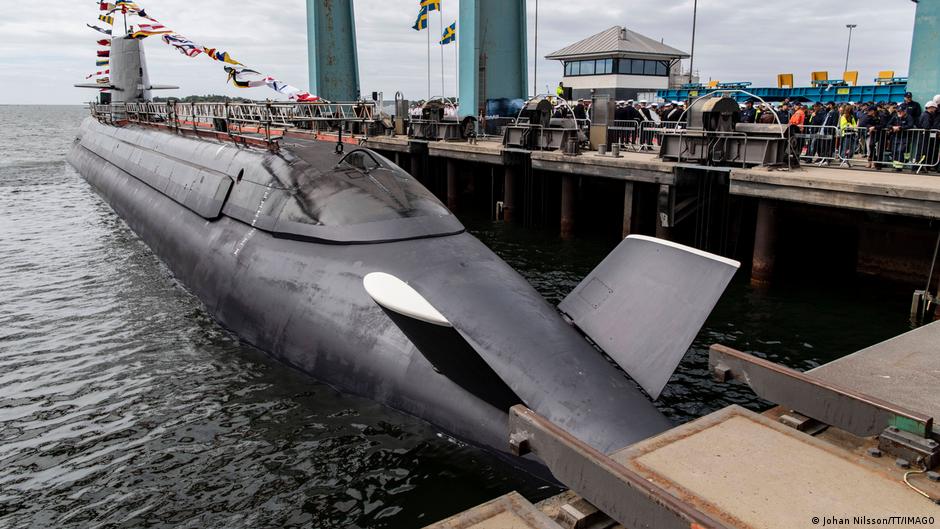
According to a press release issued by Saab, the company is slated to commence deliveries of the new submarines in 2030, with the final vessel expected to be handed over by 2038. These submarines will be of the A26, or Blekinge-class, renowned for their advanced design and operational capabilities. The comprehensive package extends beyond the vessels themselves, encompassing a full weapons suite, as well as essential training and maintenance provisions for the Polish Navy personnel.
A notable aspect of the agreement is Saab's commitment to establishing maintenance, repair, and overhaul (MRO) facilities within Poland. These facilities will operate in collaboration with Polish companies, a strategic initiative designed to foster and enhance Poland's domestic defense autonomy. This collaborative approach not only supports the long-term sustainability of the submarine fleet but also contributes to the growth of Poland's indigenous defense industry.
The A26 Blekinge-Class Submarine: A Closer Look
The A26-class diesel-electric submarines are engineered to meet the demanding operational requirements of the Baltic Sea environment. A key characteristic highlighted by Saab is their ability to operate with exceptional stealth, maintaining 'complete silence and remaining undetected' for extended periods. This capability is crucial for intelligence gathering, surveillance, and reconnaissance missions, making them highly effective assets in modern naval warfare. The design allows these vessels to remain submerged for several days, significantly enhancing their operational endurance and strategic utility.
Micael Johansson, CEO of Saab, emphasized that the new vessels will not only bolster the security of the Baltic region but also strengthen the strategic partnership between Sweden and Poland, both of which are integral partners within the NATO alliance. This sentiment was echoed by Prime Minister Kristersson, who stated on social media that 'A strong Polish submarine force strengthens security in our shared Baltic Sea, and across NATO as a whole. When Sweden and Poland share the most advanced capabilities in the Baltic Sea, our part of the world becomes safer.'
Bridging the Gap: Interim Solutions for the Polish Navy
Currently, the Polish Navy operates only one aging Russian-made submarine, which is nearing the end of its service life. To address the operational gap between now and the delivery of the first A26-class submarine in 2030, Sweden has agreed to provide Poland with the use of one of its existing vessels, the HMS Södermanland. This interim solution ensures that Poland maintains a submarine presence during the transition period, preventing any significant lapse in its underwater defense capabilities.
The broader context for this defense expenditure reflects a trend among European NATO member states to significantly increase their defense spending. This surge in investment is largely a response to Russia's ongoing military actions in Ukraine and growing uncertainties regarding the future commitment of the United States to European security under potential shifts in leadership. Nations across Europe are actively working to replenish and modernize their military inventories, recognizing the imperative of robust self-defense capabilities in a rapidly changing global security landscape.
Source: Original Article